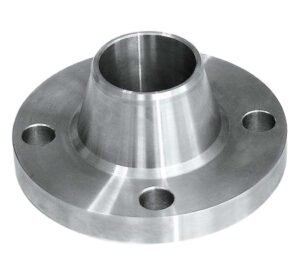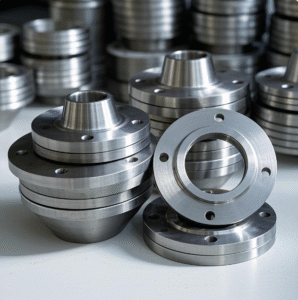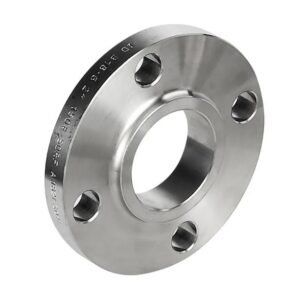
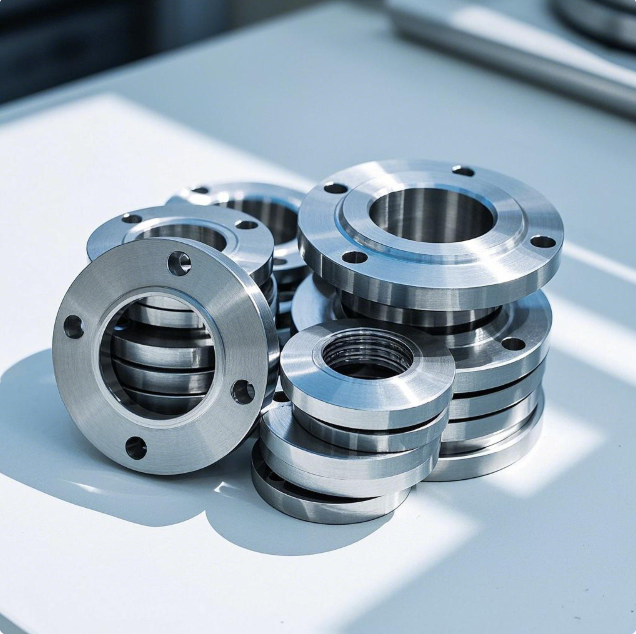
Duplex stainless steel flanges (grades like 2205 and 2507) are lauded for their high strength and corrosion resistance, making them ideal for harsh offshore environments. However, improper use can lead to catastrophic failures, costly downtime, and safety hazards. In this guide, we uncover three common—and often overlooked—misuses of duplex flanges in offshore platforms, backed by real-world case studies and actionable fixes to safeguard your operations.
Why Duplex Steel Flanges Fail Offshore
Offshore platforms face relentless challenges:
-
Saltwater corrosion: Chlorides attack metal surfaces.
-
High-pressure cycles: Stress fatigue from waves and operational loads.
-
Temperature extremes: Thermal expansion/contraction strains materials.
Duplex steels excel here, but only when used correctly. Misapplication erodes their advantages, turning them into liabilities.
Misuse 1: Improper Welding Practices
The Risk:
Duplex steels require precise welding to retain their dual-phase microstructure (50% austenite, 50% ferrite). Poor techniques cause:
-
Sigma phase formation: Brittle intermetallic compounds that reduce toughness.
-
Preferential corrosion: In heat-affected zones (HAZs) due to unbalanced phases.
Case Study:
A Norwegian oil rig experienced flange cracks in seawater cooling lines within 18 months. Investigation revealed sigma phase formation from excessive heat input during welding.
How to Fix:
-
Follow ASTM A923 Standards: Ensure post-weld heat treatment (PWHT) at 1020–1100°C to restore phase balance.
-
Use Correct Filler Metals: ER2209 for duplex 2205; ER2594 for super duplex 2507.
-
Control Heat Input: Limit to 0.5–1.5 kJ/mm and interpass temps to 150°C.
Misuse 2: Wrong Grade Selection
The Risk:
Using standard duplex 2205 in extreme environments requiring super duplex 2507 leads to:
-
Pitting corrosion: 2205’s lower pitting resistance equivalence (PRE = 35 vs. 2507’s PRE ≥40).
-
Stress corrosion cracking (SCC): In high-temperature, high-chloride conditions.
Case Study:
A Gulf of Mexico platform used 2205 flanges in a subsea manifold exposed to 80°C seawater with 30,000 ppm chlorides. Pitting occurred within 2 years, necessitating a $2M retrofit with 2507 flanges.
How to Fix:
-
Match Grade to Environment:
-
2205: Temperatures ≤60°C, chlorides ≤5,000 ppm.
-
2507: Temperatures ≤100°C, chlorides ≤50,000 ppm (e.g., deepwater wells).
-
-
Conduct PRE Calculations: PRE = %Cr + 3.3(%Mo) + 16(%N). Aim for PRE ≥40 in ultra-harsh zones.
Misuse 3: Neglecting Galvanic Corrosion
The Risk:
Pairing duplex flanges with carbon steel bolts or pipes creates galvanic couples, accelerating corrosion.
Case Study:
An Australian LNG plant reported severe bolt corrosion on duplex flanges within 6 months. The culprit? Carbon steel bolts in submerged splash zones.
How to Fix:
-
Isolate Dissimilar Metals: Use dielectric gaskets or sleeves.
-
Upgrade Fasteners: Specify duplex or super duplex bolts (ASTM A320 L43/L44).
-
Apply Coatings: Zinc-nickel coatings on carbon steel components in mixed-metal systems.
Proactive Solutions for Offshore Teams
-
Mandate PMI Testing: Use portable XRF analyzers to verify material grades during installation.
-
Adopt NACE SP0106: Implement strict inspection protocols for corrosive offshore environments.
-
Train Welding Teams: Certify welders to ISO 9606-1 for duplex steel procedures.
FAQ: Avoiding Duplex Flange Failures
Q: Can duplex flanges be repaired onsite?
A: Yes, but use qualified weld procedures and post-repair passivation with nitric acid.
Q: How often should offshore flanges be inspected?
A: Bi-annually for splash zones; annually for dry areas. Use ultrasonic testing (UT) for cracks.
Q: Is 2205 suitable for H₂S environments?
A: Only with NACE MR0175 compliance. For high H₂S, upgrade to 2507.
Q: What’s the cost difference between 2205 and 2507 flanges?
A: 2507 costs 2–2.5x more, but reduces replacement frequency by 70% in extreme conditions.