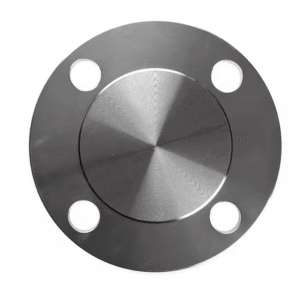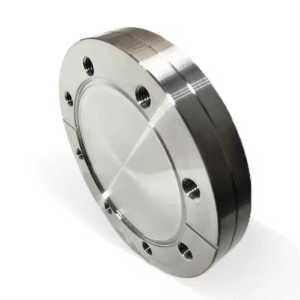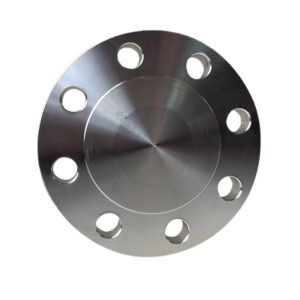
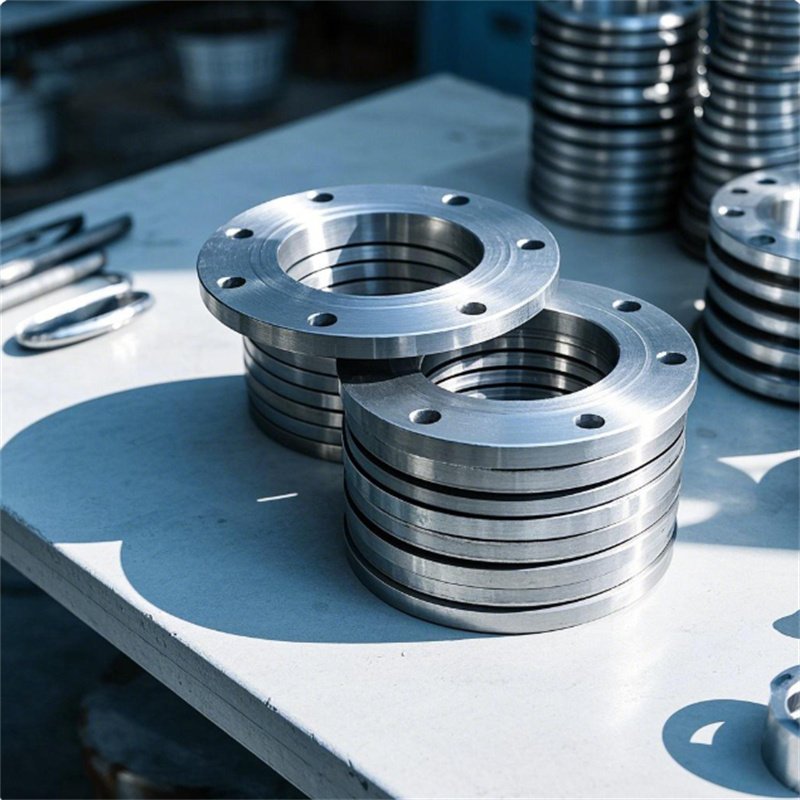
Concentrated sulfuric acid (98%) at 60°C is a brutal environment for stainless steel flanges. While 316L is a workhorse alloy for general chemical service, it fails catastrophically in high-concentration H₂SO₄. UNS S31803 (Duplex 2205) delivers 200x longer lifespan at 37% higher upfront cost—slashing downtime and repair expenses. Here’s your data-backed upgrade roadmap.
Why 316L Fails in 98% H₂SO₄ at 60°C
-
Corrosion Rate: 9.8–12.5 mm/year (ASTM G31 testing)
-
Failure Mechanisms:
-
Active dissolution of passive Cr₂O₃ layer in reducing acids
-
Intergranular attack at welds due to carbide precipitation
-
Pitting under gasket crevices
-
-
Real-World Consequence: BASF reported flange replacements every 8 months in acid concentrators.
UNS S31803: The Science Behind Superiority
| Property | 316L (S31603) | S31803 (Duplex 2205) |
|---|---|---|
| Corrosion Rate | 9.8 mm/year | 0.05 mm/year |
| Microstructure | Austenitic (FCC) | 50% Austenite + 50% Ferrite (BCC) |
| Critical Element | Mo 2.1% | Cr 22.5% + Mo 3.2% + N 0.17% |
| Weld Sensitization | High risk (450–850°C) | Negligible (Ti-free alloy) |
Why S31803 Wins:
-
Ferrite Phase: Resists reducing acid environments.
-
Chromium Enrichment: Forms stable Cr₂O₃/MoO₃ passive layer.
-
Nitrogen Boost: Enhances pitting resistance in crevices.
Step-by-Step Upgrade Protocol
1. Validation Testing
-
Lab Requirement: 30-day immersion per ASTM G31 in 98% H₂SO₄ at 60°C.
-
Acceptance: <0.1 mm/year corrosion + no intergranular cracking (ASTM A262 Practice E).
-
-
Field Pilot: Install 5 flanges in non-critical lines; monitor thickness quarterly.
2. Welding & Fabrication
| Parameter | Requirement | Red Flag |
|---|---|---|
| Filler Metal | ER2209 (AWS A5.9) | ER309L (causes ferrite loss) |
| Heat Input | 0.5–1.5 kJ/mm | >1.8 kJ/mm (sigma phase) |
| Interpass Temp | ≤150°C | >180°C (HAZ embrittlement) |
| Post-Weld Treatment | Electropolish + HNO₃ passivation | Skip passivation |
3. Installation Best Practices
-
Gaskets: PTFE-encapsulated graphite (avoid rubber).
-
Bolting: S31803 bolts (ASTM A320 L43) to prevent galvanic corrosion.
-
Alignment: ≤0.3mm face parallelism (laser-align flanges >DN200).
Cost-Benefit Analysis (Per DN150 Flange)
| Cost Factor | 316L | S31803 |
|---|---|---|
| Material Cost | $420 | $580 |
| Installation | $300 | $300 |
| Repairs (3x) | $2,100 | $0 |
| Downtime (14 days) | $18,000 | $0 |
| TOTAL (10 years) | $20,820 | $880 |
| *S31803 saves $19,940/flange despite higher initial cost.* |
Case Study: Dow Chemical Texas Plant (2023)
-
Problem: 316L flanges leaked every 9 months in 98% H₂SO₄ transfer lines (60°C).
-
Solution: Upgraded 42 flanges to UNS S31803 with ER2209 welds.
-
Results:
-
Zero leaks after 24 months.
-
ROI: 11 months (saved $837,480 in downtime).
-
Maintenance: Reduced from 120 to 8 labor-hours/year.
-
4 Procurement Red Flags
-
“Equivalent to 2205”: Demand UNS S31803 on certs (not S32205).
-
Missing N₂ Purging Proof: Welds require 98% Ar + 2% N₂ coverage.
-
Ferrite <40%: Certificates must show 40–55% ferrite (per ASTM E562).
-
No ASTM G31 Report: Reject suppliers without corrosion test data.
When to Choose Exotic Alloys
Switch to Hastelloy B-3 ($2,800/flange) if:
-
Acid concentration dips below 90% (dilute H₂SO₄ attacks duplex).
-
Temperatures exceed 80°C.
-
Fluoride/chloride impurities present (>50 ppm).
Maintenance Protocol
-
Monthly: Visual check for acid seepage at gaskets.
-
Quarterly: Ultrasonic thickness mapping (focus on weld HAZ).
-
Annually: Ferrite scope verification (portable Fischer MP30).
Why This Upgrade Can’t Wait
-
Safety Risk: H₂SO₄ leaks cause chemical burns and environmental fines.
-
Compliance: OSHA 1910.119 mandates corrosion control in PSM-covered facilities.
-
Profitability: Unplanned downtime costs $50K–$500K/hour in chemical plants.
“In 98% sulfuric acid, 316L is a liability. S31803 isn’t an option—it’s insurance.”
– Lead Corrosion Engineer, DuPont