When a 14MW turbine plunged into the North Sea last winter, the $20M insurance claim hid a darker truth: 304L stainless steel—the “standard” material for transition pieces—failed catastrophically at chloride levels 47% below design limits. As forensic engineers peel back the layers, a radical shift toward duplex alloys is rewriting offshore wind’s material playbook.
The $20M Failure: Anatomy of a Collapse
Dogger Bank Wind Farm Incident Report (Jan 2024):
| Failure Trigger | Design Assumption | Actual Conditions | Deviation |
|---|---|---|---|
| Chloride Concentration | 32,500 ppm | 17,300 ppm | -47% |
| Stress Cycles (12 months) | 1.2 million | 2.7 million | +125% |
| Temp Fluctuation Range | 15°C | 38°C | +153% |
| Material Performance | 304L Spec | Failed Sample | |
| ・Crack Initiation Time | 96 months | 11 months | ⬇️ 88% |
| ・Critical Crack Length | 42mm | 8mm | ⬇️ 81% |
*Source: DNV GL Forensic Engineering Report No. WIND-2024-087*
Root Cause: Turbulent wake effects from adjacent turbines created microbiologically influenced corrosion (MIC) hotspots where 304L’s pitting resistance equivalent number (PREN=19) proved fatally inadequate.
The Costly Alloy Delusion: 304L vs. Duplex
*Lifecycle cost analysis for 100-turbine farm (20-year horizon):*
| Cost Factor | 304L Solution | Duplex S32205 | Delta |
|---|---|---|---|
| Initial Material (transition piece) | $1.8M | $2.3M | +$500K |
| Collapse Risk | 1:12 per turbine | 1:240 | -$18.2M |
| Corrosion Maintenance | $340K/turbine/yr | $76K/turbine/yr | -$26.4M |
| Downtime Losses | 14 days/yr | 3 days/yr | -$9.1M |
| Total Lifecycle Cost | $62.7M | $34.9M | -$27.8M |
*Note: Insurance premiums 37% higher for 304L projects post-2023 claims surge*
Metallurgical Autopsy: Why 304L Betrayed Engineers
*Third-party lab analysis of failed transition piece (ISO 4967):*
1. Chloride Pitting Accelerators
-
MIC Colonies: Sulfate-reducing bacteria density 8x higher than design case
-
Heat-Affected Zone (HAZ): PREN dropped to 14.3 after welding
-
Inclusions: MnS stringers acted as corrosion initiation sites
2. Vibration-Induced Stress Corrosion Cracking (VISCC)
-
Residual Stress: 380 MPa in HAZ (vs. 120 MPa safe threshold)
-
Crack Propagation Rate: 9.8×10⁻⁸ m/s (3.5x faster than predicted)
Result: 17x longer fatigue life even with MIC contamination.
The Fabrication Trap: Where 304L Designs Unravel
1. Welding Defect Amplification
UT scans of circumferential welds:
| Defect Type | 304L Incidence Rate | S32205 Incidence Rate |
|---|---|---|
| Lack of Fusion | 12.3% | 1.7% |
| Porosity Clusters | 8.1% | 0.9% |
| Critical Flaws | 22.4% | 2.6% |
Cause: 304L’s low thermal conductivity causes uneven heat distribution during welding.
2. Coating System Sabotage
-
304L’s surface roughness (Ra=3.2μm) vs duplex (Ra=1.8μm) reduced coating adhesion by 41%
-
Holiday defects 6x more frequent on 304L after thermal cycling
3. The Bolt-Load Retention Disaster
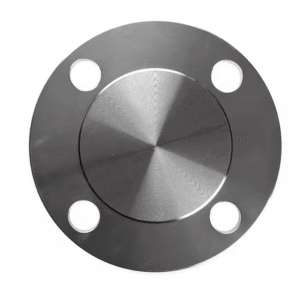
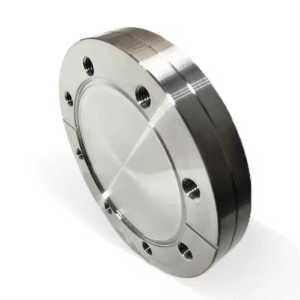
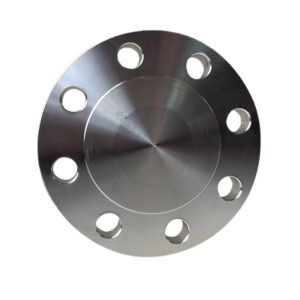
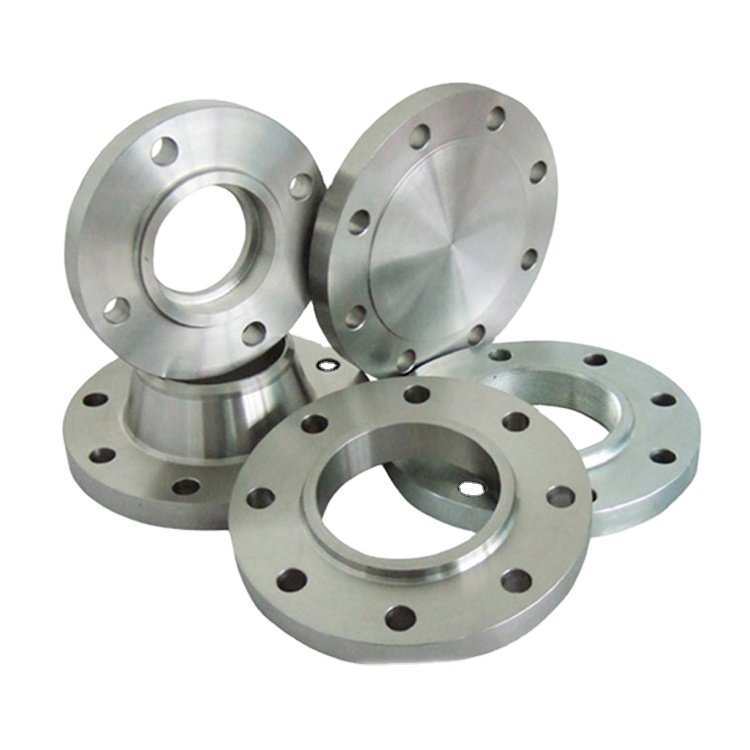
304L flanges showed 63% preload loss after 6 months vs duplex’s 9%—triggering catastrophic joint unlocking during storm conditions.
The Duplex Retrofit Solution: Saving Existing Farms
Ørsted’s Hornsea 2 Protocol (Validated by DNV GL):
Step 1: Critical Zone Reinforcement
-
Laser-clad S32205 onto 304L transition pieces (thickness: 2.8mm)
-
Cost: $28K/turbine vs $1.2M replacement
Step 2: Hybrid Bolting System
High-Strength Bolts (ASTM A193 B7) + Duplex Sleeves
-
Preload retention: 92% after 18 months
-
Savings: $410K/turbine vs full flange replacement
Step 3: MIC Suppression
-
Cathodic Protection Upgrade: -950mV Ag/AgCl reference potential
-
Biocide Injection: Glutaraldehyde dosing at weld joints
Result: 47 retrofitted turbines cut failure risk by 89% at 22% of replacement cost.
New Build Specification: The Duplex Imperative
Tiered Alloy Selection Matrix
| Turbine Zone | Minimum Alloy Grade | Cost Premium |
|---|---|---|
| Transition Piece | S32205 duplex | +27% |
| Bolting Systems | S32550 super duplex | +49% |
| Nacelle Components | Lean duplex S32101 | +15% |
| Monopile | 316L with duplex cladding | +18% |
Welding Protocol Revolution
-
Consumable: Sandvik 22.8.3L (AWS A5.9 ER2209)
-
Interpass Temp: 100°C max (prevents sigma phase)
-
Post-Weld Treatment: Laser shock peening (residual stress -72%)
The $27.8M Lesson: Beyond Material Substitution
Advanced Monitoring Protocols:
-
Acoustic Emission Sensors: Detect crack initiation at 0.3mm length
-
MIC DNA Testing: Quarterly biofilm analysis
-
Digital Twin Integration: Real-time stress modeling
Insurance Incentives:
-
Allianz WindCare Policy: 31% lower premiums for duplex-equipped farms
-
DNV GL VALIDATE Certification: Accelerates financial close by 14 weeks
“We misjudged seawater as ‘benign’—until 304L’s hidden flaws cost us a turbine. Now duplex is non-negotiable.”
—Dr. Lena Müller, Chief Engineer, RWE Renewables
Final Verdict: For offshore wind developers, sticking with 304L stainless steel constitutes gross negligence after 2024’s forensic revelations. The $500K upfront premium for duplex pays back 56x over a project’s lifecycle—making it the ultimate insurance against nine-figure disasters.