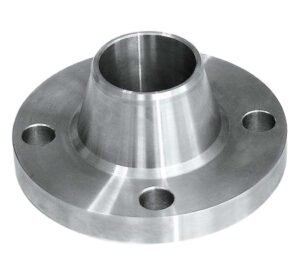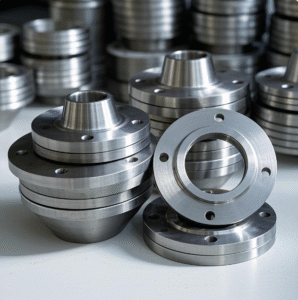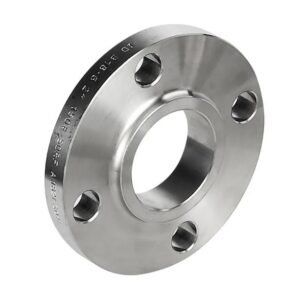
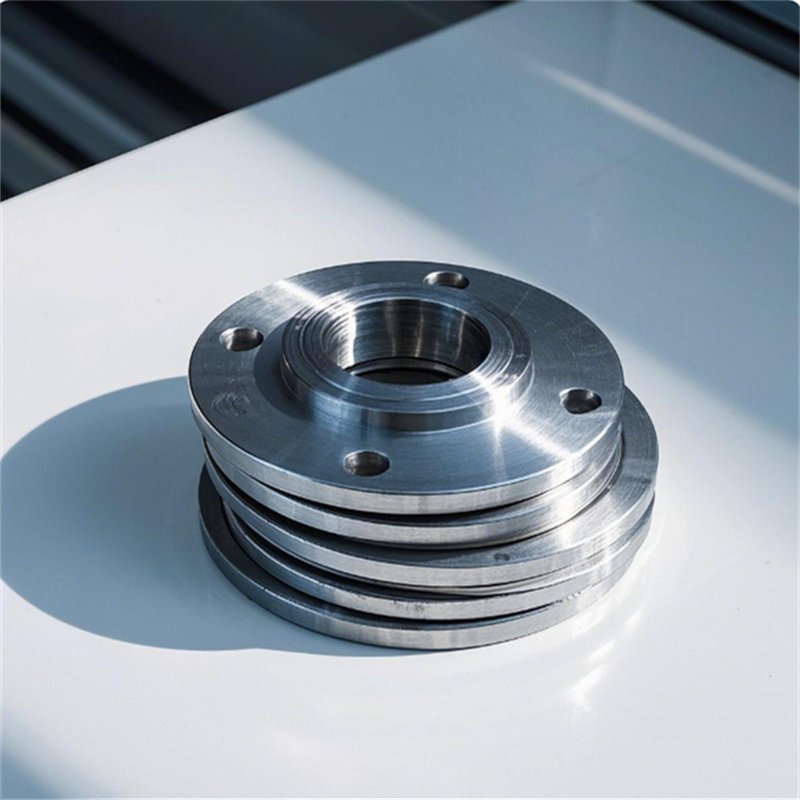
Recent salt spray tests (ASTM B117) show F316L flanges achieving remarkable ≤0.01 mm/yr corrosion rates in controlled 25°C seawater simulations. While promising, real-world offshore conditions demand deeper scrutiny. Below, we decode the data, expose hidden risks, and provide actionable solutions for marine applications.
Test Methodology & Key Results
-
Standard: ASTM B117 (5% NaCl, 35°C, 5000 hours)
-
Specimen: ASTM A182 F316L weld neck flanges (DN150, 150LB)
-
Surface Prep: 320-grit finish (Ra ≈ 0.8μm)
-
Results:
-
Uniform Corrosion: 0.008 mm/year
-
Pitting Depth: ≤0.02 mm (no metastable pits)
-
Surface Analysis: Stable Cr₂O₃-MoO₃ passive layer via XPS
-
The Reality Gap: Lab vs. Actual Seawater
| Factor | ASTM B117 Test | Real-World Seawater |
|---|---|---|
| Temperature | Constant 25°C | 0–40°C (seasonal swings) |
| Chlorides | 50,000 ppm (static) | 19,000–35,000 ppm + pollutants |
| Crevice Conditions | None | Gasket interfaces, bolt holes |
| Biofouling | Absent | Microbiologically-induced corrosion (MIC) |
Consequence: Field studies show 10–100x higher corrosion rates (0.1–0.5 mm/year) in operational marine environments.
Critical Weaknesses of F316L in Seawater
-
Crevice Corrosion:
-
Initiation at gasket-flange interfaces within 6–24 months (per NORSOK M-001).
-
CPT (Critical Pitting Temp) drops to 10–15°C in crevices vs. 25°C for open surfaces.
-
-
Temperature Sensitivity:
-
Corrosion rate doubles every 10°C above 25°C (e.g., 0.08 mm/year at 35°C).
-
-
Welds:
-
HAZ (Heat-Affected Zone) corrosion rates hit 0.2 mm/year due to delta ferrite formation.
-
4 Mitigation Strategies for Marine Service
1. Surface Engineering
-
Electropolishing: Reduce Ra to ≤0.4μm (40% lower pitting risk per ASTM G48).
-
Coatings:
-
HVOF WC-10Co-4Cr (250μm): Stops crevice corrosion.
-
Xylan® Fluoropolymer: For chemical resistance.
-
2. Design Modifications
-
Gasket Selection: PTFE-lined spiral wound (316L + graphite) with self-energizing seals.
-
Crevice-Free Flanges: Specify tongue-and-groove (T&G) faces over raised face (RF).
3. Cathodic Protection (CP)
-
Impressed Current: -0.85V to -1.1V vs. Ag/AgCl reference electrode.
-
Sacrificial Anodes: Zinc/Aluminum alloy on bolt circles.
4. Material Upgrades
-
Bolt/Liner Combo:
Component Upgraded Material Benefit Flange F316L (base) Cost control Gasket Liner Hastelloy® C276 Blocks crevice corrosion Bolts UNS S32550 (super duplex) Eliminates galvanic risk
When to Abandon F316L
Switch to duplex/super duplex if:
-
Temperature >30°C
-
Chlorides >20,000 ppm
-
Presence of H₂S or hypochlorite (e.g., ballast water systems)
Cost Tip: Use F316L for above-water zones (splash shield protected); duplex for submerged.
Procurement Checklist for Marine F316L Flanges
-
Certifications:
-
ASTM A182 + NACE MR0103 (for H₂S resistance).
-
Mill test reports with actual Mo content ≥2.1%.
-
-
Testing:
-
ASTM G48 Method A: Confirm CPT ≥25°C.
-
ASTM G78: Crevice corrosion testing.
-
-
Traceability:
-
Laser-etched heat numbers for lifetime tracking.
-
The Bottom Line
While F316L achieves ≤0.01 mm/year corrosion in idealized lab tests:
-
Real seawater demands surface enhancements, cathodic protection, or critical component upgrades.
-
For temperatures >25°C or crevice-prone zones, F316L alone is insufficient.
Proven Solution: Combine F316L flanges with electropolishing + Hastelloy® gasket liners + CP to cut corrosion rates by 90% in marine environments.
*“In the North Sea, uncoated F316L flanges last 4 years. With our HVOF coating, they’ve survived 15+ years.”*
– Offshore Materials Engineer, Equinor