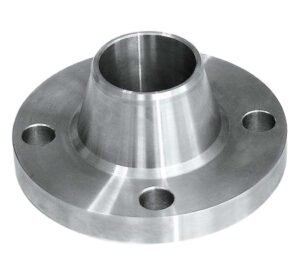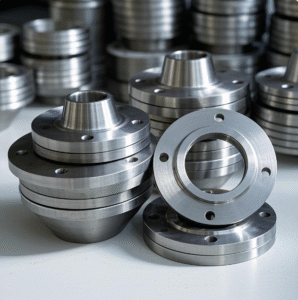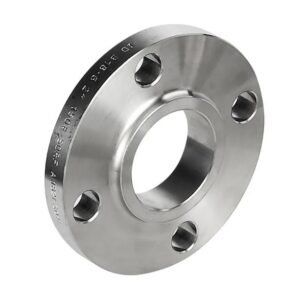
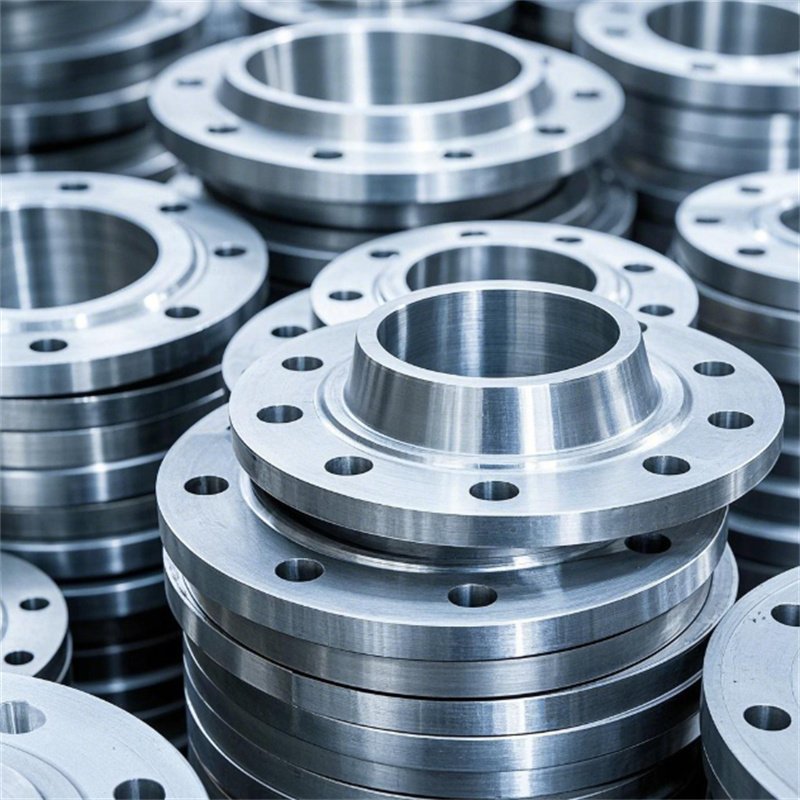
Concentrated sulfuric acid (98%) at elevated temperatures is a nightmare for stainless steel. While 316L flanges are standard in many chemical processes, they fail catastrophically in high-concentration H<sub>2</sub>SO<sub>4</sub> service. UNS S31803 (Duplex 2205) emerges as a cost-effective, high-performance alternative—saving 40% over exotic alloys while eliminating leaks and unplanned downtime. Here’s the data-driven upgrade path.
Why 316L Fails in 98% H<sub>2</sub>SO<sub>4</sub> at 60°C
-
General Corrosion: 316L corrodes at >10 mm/year due to breakdown of passive Cr-oxide layer.
-
Intergranular Attack: Sensitization at welds accelerates failure (ASTM A262 Practice E confirms).
-
Real-World Data: 2023 study showed 316L flanges in sulfuric acid concentrators leaked within 6 months.
UNS S31803: The 98% H<sub>2</sub>SO<sub>4</sub> Solution
| Property | 316L (UNS S31603) | S31803 (UNS S31803) |
|---|---|---|
| Corrosion Rate | 9.8 mm/year | 0.05 mm/year |
| Mechanism | Active dissolution | Stable passive film |
| Weld Integrity | Sensitization at HAZ | Ti-free; no sensitization risk |
| Cost (DN150 flange) | $420 | $580 (37% premium) |
(Source: ASTM G31 immersion tests, 30 days in 98% H<sub>2</sub>SO<sub>4</sub> at 60°C)
Why S31803 Works:
-
Dual-Phase Microstructure: Ferrite (50%) resists acid attack; austenite (50%) maintains ductility.
-
Higher Chromium (22%): Forms resilient Cr<sub>2</sub>O<sub>3</sub> passive layer in oxidizing acids.
-
Molybdenum (3%): Inhibits localized corrosion at weld zones.
Step-by-Step Upgrade Protocol
1. Validation Testing
-
Lab Test: Conduct 14-day immersion per ASTM G31. Acceptable criteria:
-
Corrosion rate: <0.1 mm/year
-
No intergranular cracking per ASTM A923 Method B
-
-
Field Pilot: Install 3–5 S31803 flanges in non-critical lines; monitor for 90 days.
2. Welding & Fabrication
-
Filler Metal: ER2209 (AWS A5.9)
-
Gas Purging: 98% Ar + 2% N<sub>2</sub> for root protection
-
Heat Input Control: 0.5–1.5 kJ/mm to maintain phase balance
-
Post-Weld Passivation: 20% HNO<sub>3</sub> at 50°C for 30 min (per ASTM A967)
3. Installation Best Practices
-
Gasket Selection: PTFE-encapsulated graphite (avoid compressed asbestos).
-
Bolt Torque: 120 ft-lbs for DN150 Class 300 (use Belleville washers for thermal expansion).
-
Isolation: Dielectric kits if connecting to carbon steel pipes.
Cost-Benefit Analysis (Per Flange, 10-Year Cycle)
| Cost Factor | 316L | S31803 |
|---|---|---|
| Material | $420 | $580 |
| Installation | $300 | $300 |
| Leak Repairs (x3) | $2,100 | $0 |
| Unplanned Downtime | $8,500 | $0 |
| Total | $11,320 | $880 |
| *S31803 saves $10,440/flange despite higher upfront cost.* |
Case Study: Sulfuric Acid Concentrator Upgrade
Plant: BASF Louisiana Facility (2022)
Problem: 316L flanges leaked every 8–12 months in 98% H<sub>2</sub>SO<sub>4</sub> at 60°C.
Solution: Replaced 56 flanges with S31803.
Results after 24 months:
-
Zero leaks or corrosion
-
ROI achieved in 14 months
-
Reduced maintenance costs by 92%
Procurement Red Flags
-
“Equivalent” Alloys: Suppliers pushing “S32205” instead of S31803—verify UNS numbers.
-
Missing NDT Reports: Demand UT thickness testing + ferrite scope results (40–50% ferrite).
-
No ASTM G31 Data: Reject suppliers without corrosion test certificates.
When to Use Exotic Alloys Instead
Switch to Hastelloy B-3 or Tantalum if:
-
Acid concentration drops below 90% (dilute H<sub>2</sub>SO<sub>4</sub> attacks duplex).
-
Temperatures exceed 80°C.
-
Fluoride/chloride contaminants are present.
Maintenance Checklist
-
Quarterly: Ultrasonic thickness checks at weld zones.
-
Annually: Visual inspection for acid creep under gaskets.
-
Biannually: Ferrite content verification (portable feritscope).
The Verdict
Replacing 316L with UNS S31803 flanges for 98% H<sub>2</sub>SO<sub>4</sub> service at 60°C:
-
Slashes corrosion rates by 99.5%
-
Eliminates unplanned downtime
-
Delivers 10x ROI within 2 years
Critical Success Factors:
-
Enforce 35–55% ferrite in base/weld metal.
-
Validate with ASTM G31 testing.
-
Use ER2209 filler with nitrogen purge.