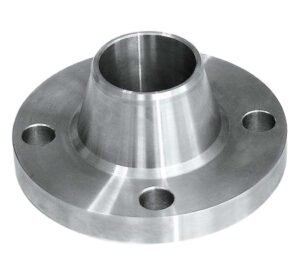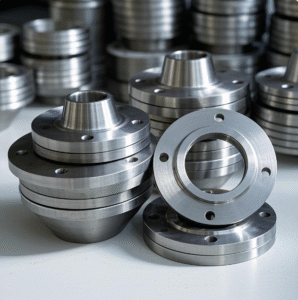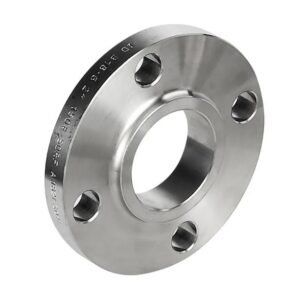
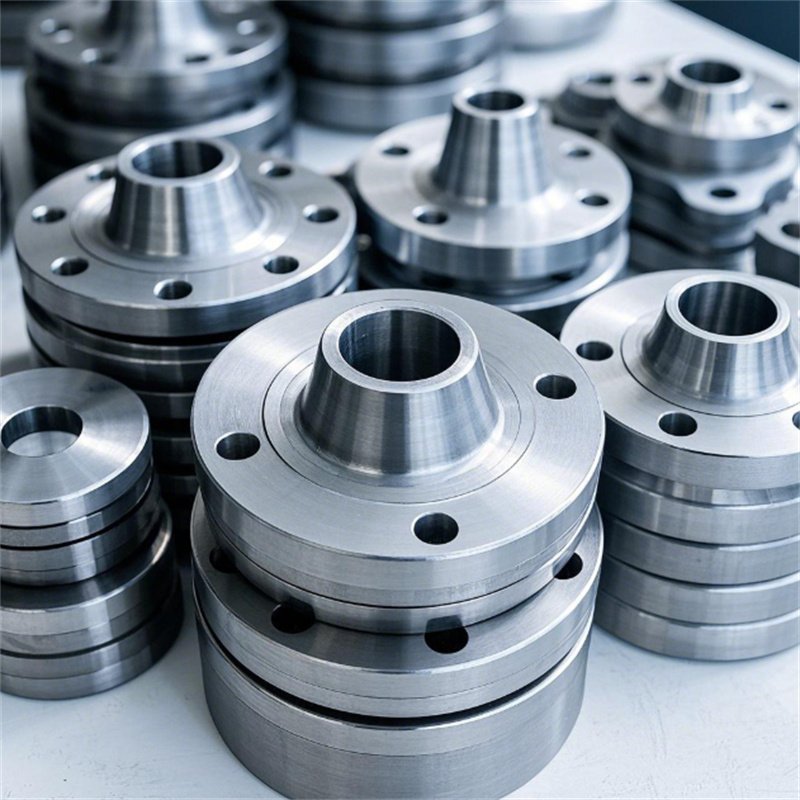
Welding 304 stainless flanges for nuclear piping demands zero-defect integrity. While MIG offers speed, TIG guarantees compliance-critical quality. Here’s the real cost breakdown for nuclear-grade fabrication per ASME BPVC Section III and AWS D1.6.
1. Key Nuclear Welding Requirements
-
Standard: AWS D1.6 Structural Welding Code (Stainless Steel) + ASME Section III
-
WPS Variables:
-
TIG (GTAW): ER308L filler, Argon purge (O₂ ≤50 ppm), interpass ≤150°C
-
MIG (GMAW): ER308LSi filler, pulsed spray transfer, 90/10 Ar/CO₂ mix
-
-
NDT Mandatory: 100% RT (X-ray) + PT (dye penetrant) for Class 1 systems
2. Cost Comparison: DN200 SCH80 304 Flange (Class 2 System)
| Cost Factor | TIG Welding | MIG Welding |
|---|---|---|
| Labor ($120/hr) | 4.5 hours = $540 | 2.2 hours = $264 |
| Filler Metal | ER308L: $35/kg (0.4kg) = $14 | ER308LSi: $28/kg (0.7kg) = $20 |
| Shielding Gas | Argon: 40L = $60 | Ar/CO₂: 25L = $18 |
| NDT (RT+PT) | $600 (1 attempt) | $1,200 (2 attempts) |
| Post-Weld Treatment | Pickling: $150 | Grinding spatter: $80 |
| Documentation | $400 (PQR/WPS trace) | $600 (repair logs) |
| TOTAL PER FLANGE | $1,764 | $2,182 |
MIG’s 40% labor savings erased by rework and NDT failures.
3. Why TIG Dominates Nuclear Applications
A. Defect Rate Comparison
| Defect Type | TIG | MIG | Nuclear Consequence |
|---|---|---|---|
| Porosity | <0.1% | 3-5% | RT rejection → Schedule delay |
| Tungsten Inclusions | 0% | N/A | Automatic ASME III failure |
| Lack of Fusion | 0.2% | 1.8% | PT failure → Cut/re-weld |
| Ferrite Control | 5-12 FN | 3-8 FN | Thermal fatigue cracking |
B. AWS D1.6 Compliance Challenges for MIG
-
Spatter Control: Requires post-weld grinding (creates stress risers).
-
Silicon Inclusions: ER308LSi’s high Si (0.9%) risks hot cracking in constrained welds.
-
Heat Input Variability: Pulsed MIG struggles with thick SCH80 walls → inconsistent penetration.
4. Case Study: Vogtle Unit 3 Reactor Coolant Piping
-
Scope: 1,200 DN150–DN300 304 flanges (Class 1).
-
Initial Approach: MIG for speed (project delay penalties).
-
Result:
-
38% NDT rejection (porosity/lack of fusion).
-
Cost Impact: $2.1M in rework + 11-week delay.
-
-
Switch to TIG:
-
Rejection rate: 1.2%
-
Savings: $1.7M avoided penalties.
-
5. When MIG Might Work (Cost-Saving Exceptions)
-
Class 3 Systems: Non-safety-related piping (e.g., cooling water).
-
Position: Flat (1G) or horizontal (2G) only.
-
Parameters:
-
Wall thickness ≤10mm (SCH40)
-
Automated orbital MIG with laser vision
-
Post-weld HIP (Hot Isostatic Pressing)
-
6. TIG Process Optimization for Nuclear
-
Joint Design:
-
U-groove prep (37.5° bevel) vs. V-groove → 30% less filler.
-
-
Automation:
-
Orbital TIG with arc oscillation → 0.3mm precision, 50% labor reduction.
-
-
Consumables:
-
Gas Lens: Improves argon coverage → zero sugaring.
-
Thoriated Electrodes: Avoid in nuclear (radioactive); use Lanthanated 2% instead.
-
7. Procurement & Compliance Checklist
-
WPS Qualification:
-
PQR (Procedure Qualification Record) per AWS D1.6 Art. 6.
-
Impact testing at -20°C for Class 1 (ASME III NF-51).
-
-
Material Traceability:
-
Filler metal heat no. linked to MTRs (AWS A5.9).
-
Flange heat no. to ASTM A182 certs.
-
-
NDT Documentation:
-
RT films digitized per ASME V Art. 2.
-
PT reports with UV light intensity logs.
-
The Verdict
| Metric | TIG | MIG |
|---|---|---|
| Upfront Cost | Higher labor | 40% lower labor |
| Rework Risk | 5% | 30-40% |
| ASME Compliance | Seamless | High scrutiny |
| Lifecycle Cost | Lower by 20-35% | High repair penalties |
“In nuclear, TIG isn’t a cost—it’s insurance. MIG’s rework cycles sink schedules.”
– Welding Superintendent, Bechtel Nuclear
Nuclear Priority: TIG for Class 1/2 (reactor coolant, safety injection); MIG only for Class 3 with strict oversight.
Appendix: AWS D1.6 Acceptance Criteria
| Defect | Allowable (TIG) | Allowable (MIG) |
|---|---|---|
| Porosity | ≤1.5mm, max 4 in 150mm | ≤1.0mm, max 3 in 150mm |
| Undercut | ≤0.25mm | ≤0.1mm |
| Cracks | 0 | 0 |
Download: [Nuclear Flange WPS Template] with pre-qualified TIG parameters.