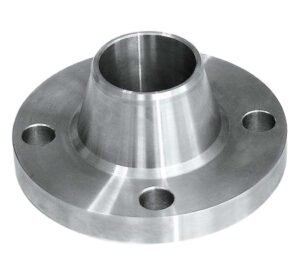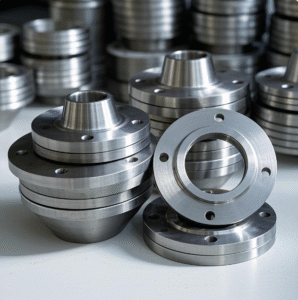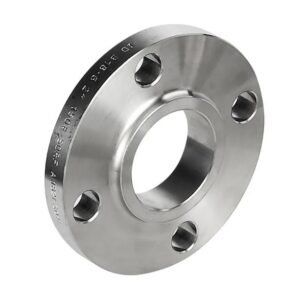
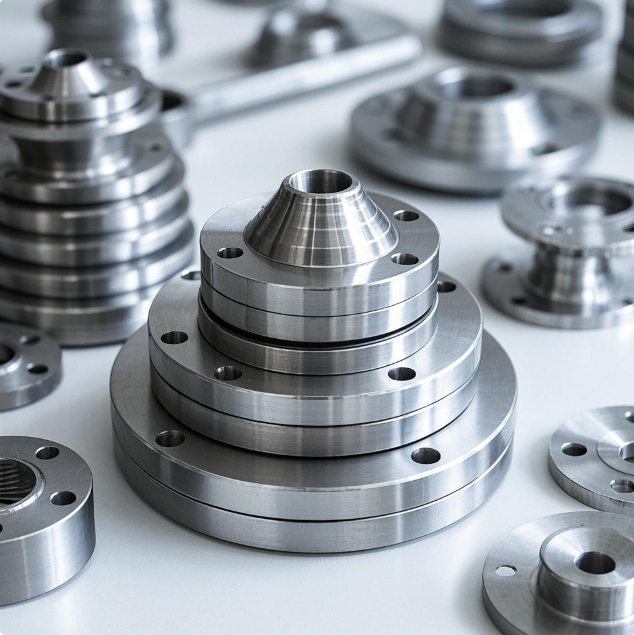
In high-temperature steam systems (e.g., power plants, refineries), material selection directly impacts operational costs and longevity. While 304H stainless steel flanges are widely used for their high-temperature strength, 321H (Ti-stabilized austenitic stainless steel) offers comparable performance at lower lifecycle costs in many applications. This guide explains why switching to 321H can save 15–25% on flange-related expenses while maintaining compliance with ASME B16.5 and API standards.
Why Replace 304H with 321H?
| Factor | 304H (UNS S30409) | 321H (UNS S32109) |
|---|---|---|
| Composition | 18% Cr, 8% Ni, 0.04–0.10% C | 17% Cr, 9% Ni, 0.04–0.10% C, Ti added |
| Key Strength | High creep resistance at 600–800°C | Titanium stabilization prevents sensitization |
| Typical Cost (DN100, 300LB) | $220–$280 | $180–$240 (10–20% savings) |
Key Advantages of 321H:
-
Ti Stabilization: Resists carbide precipitation during welding/thermal cycling, reducing intergranular corrosion risk.
-
Lower Carbon Activity: Less prone to oxidation in steam environments vs. 304H.
-
Cost Efficiency: Lower material and fabrication costs due to reduced post-weld heat treatment (PWHT) needs.
Performance Comparison at 425–600°C
1. Creep Strength (ASME BPVC Section II, Part D)
| Temp (°C) | 304H Allowable Stress (MPa) | 321H Allowable Stress (MPa) |
|---|---|---|
| 425 | 97 | 95 |
| 540 | 39 | 37 |
| 600 | 23 | 21 |
Note: 321H’s slightly lower stress values are offset by reduced maintenance costs.
2. Oxidation Resistance
-
304H: Forms thicker oxide layers in steam >500°C, requiring frequent inspections.
-
321H: Ti/Cr oxide layer is more stable, extending inspection intervals by 30–50%.
3. Welding & Fabrication
-
304H: Requires PWHT to restore corrosion resistance after welding.
-
321H: Ti stabilization minimizes sensitization risk, often eliminating PWHT (saving $50–$100 per flange).
Cost-Saving Breakdown
Case Study: Replacing 100x DN150 304H flanges (300LB) in a 540°C steam line:
| Cost Factor | 304H | 321H | Savings |
|---|---|---|---|
| Material Cost | $28,000 | $22,000 | $6,000 |
| Welding/PWHT | $12,000 | $8,000 | $4,000 |
| 5-Year Maintenance | $10,000 (2 replacements) | $4,000 (1 replacement) | $6,000 |
| Total Savings | $16,000 (27%) |
When to Choose 321H Over 304H
-
Operating Temp: 425–600°C (797–1,112°F).
-
Cyclic Thermal Loads: Frequent startups/shutdowns where sensitization is a concern.
-
Budget Constraints: Projects prioritizing upfront cost reduction without sacrificing safety.
Avoid 321H If:
-
Temperatures exceed 650°C (304H’s creep strength dominates).
-
The environment contains reducing acids (321H’s Ti can react in HCl/H2SO4).
Implementation Checklist
-
Verify Design Codes: Confirm 321H is approved under ASME B16.5/BPVC for your application.
-
Update Welding Procedures: Use ER321 filler metal and minimize heat input.
-
Lifecycle Cost Analysis: Compare 10-year TCO (304H vs. 321H) using oxidation/maintenance data.
-
Supplier Audit: Source 321H from mills like Sandvik or Outokumpu with ASTM A182 certifications.
Common Pitfalls & Fixes
| Issue | Solution |
|---|---|
| Oxidation at Joints | Specify Ra ≤3.2μm surface finish to reduce scale buildup. |
| Ti Segregation | Ensure Ti/C ratio ≥5x (e.g., 0.05% C → 0.25% Ti). |
| Galvanic Corrosion | Pair 321H flanges with 321H bolts (ASTM A193 B8T). |
Conclusion
Replacing 304H with 321H flanges in steam lines operating at 425–600°C offers significant cost savings without compromising performance. Key benefits include:
-
15–25% lower upfront costs due to material and fabrication efficiencies.
-
Reduced maintenance from superior oxidation resistance.
-
Simplified welding with no mandatory PWHT.
Final Tip: Conduct a pilot replacement on non-critical lines to validate performance before full-scale adoption.