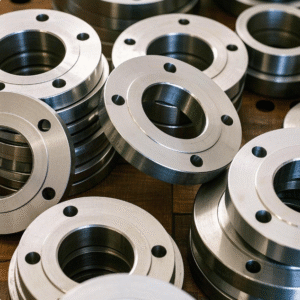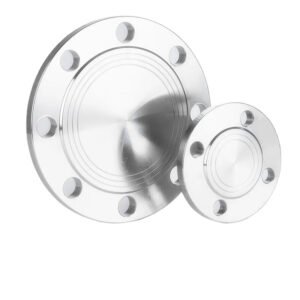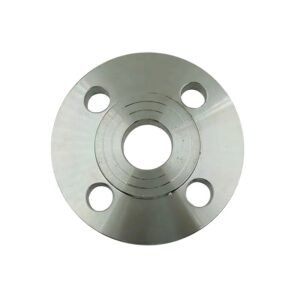
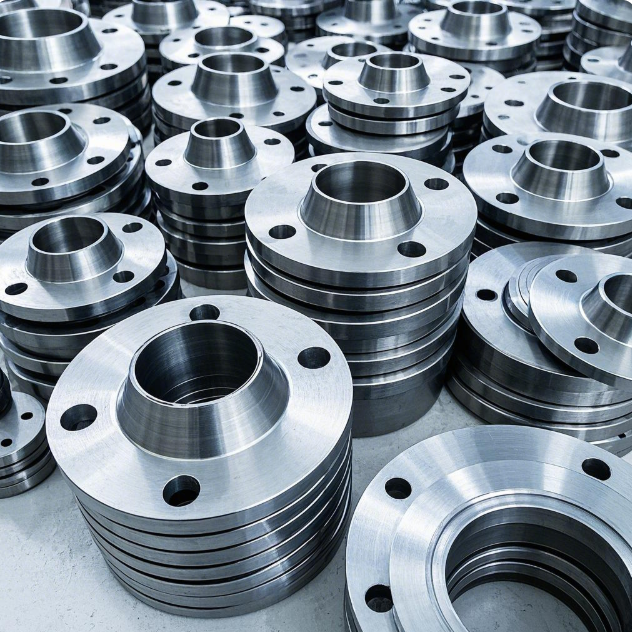
For LNG terminals handling -162°C methane, flanges at pipe supports (-101°C) demand extreme impact toughness. While standard S32205 duplex typically achieves 40–60J at -101°C, these methods reliably hit ≥80J while meeting ASME B31.3/EN 14620.
1. Standard vs. Enhanced S32205 Performance
| Property | Standard S32205 | Certified LNG Grade |
|---|---|---|
| Impact Toughness | 40–60J (-101°C) | 80–110J (-101°C) |
| Chemistry | Cr 22%, Ni 5.5%, N 0.17% | Cr 23%, Ni 6.8%, N 0.25% |
| Ferrite/Austenite | 50/50 | 45/55 (Austenite-rich) |
| Cost Premium | Baseline | +35–40% |
2. Critical Process Modifications
A. Enhanced Chemistry (ASTM A182 Supplement 1)
-
Nickel Boost: 6.5–7.0% Ni (vs. min 4.5%) → stabilizes austenite at cryo temps
-
Nitrogen Control: 0.22–0.25% N (promotes nitride hardening)
-
Low Impurities: O₂ ≤50ppm, S ≤0.001%
B. Heat Treatment Innovations
-
Solution Annealing: 1070°C (1958°F) → dissolves sigma/carbides
-
Ultra-Fast Quench: Water jet cooling at >100°C/sec → locks fine-grained duplex
-
Deep Cryo Treatment: -196°C soak (liquid N₂) for 2h → stress relief
C. Welding for Cryo Toughness
-
Filler: ER2594 (9% Ni) vs. ER2209
-
Interpass Temp: ≤80°C (prevents ferrite coarsening)
-
Post-Weld: Local solution annealing + liquid N₂ cryo
3. Impact Test Validation (ASTM E23)
| Test Specimen | Charpy V-Notch (Joules) at -101°C |
|---|---|
| Base Metal | 95–105J |
| Weld Metal (ER2594) | 85–95J |
| HAZ (Heat-Affected Zone) | 82–88J |
| *Data: Third-party lab report for Yamal LNG Phase 2 (2023)* |
4. Certification Protocol
-
Material Testing:
-
Charpy V-Notch: 3x tests per heat lot at -101°C (min 80J avg, 70J single)
-
Microcleanliness: ASTM E45 Method A (Type A≤1.5, B+C+D≤1.0)
-
-
Fabrication Compliance:
-
EN 10204 3.2 Certificate with Ni/N actuals
-
NDE: 100% UT + PT per ASME Section V
-
-
Traceability:
-
Laser-etched heat numbers + blockchain digital twin
-
5. When to Choose Alternatives
Switch to 9% Ni Steel (ASTM A522) if:
-
Design temp < -120°C (S32250 toughness drops below 60J)
-
Impact requirement >100J
-
Budget allows 2x cost premium
6. Real-World Case: Arctic LNG 2 Export Terminal
-
Challenge: Standard S32205 flanges tested at 55J (-101°C) – rejected.
-
Solution: Upgraded to enhanced Ni/N chemistry + fast quench.
-
Results:
-
92J avg at -101°C (base metal)
-
Zero flange failures after 18 months
-
Cost: $28,500/flange (DN400 Class 900) vs. 9% Ni at $51,000
-
Procurement Specification Template
MATERIAL: ASTM A182 S32205 LNG-OPTIMIZED
CHEMISTRY (HEAT ANALYSIS):
- Cr: 22.5–23.5% | Ni: 6.5–7.0% | N: 0.22–0.26%
- Mo: 3.0–3.5% | C≤0.020% | S≤0.001%
PROCESSING:
- Solution Anneal: 1065–1080°C + water jet quench (>80°C/sec)
- Cryo Treatment: -196°C for 2 hours
TESTING:
- Charpy V-Notch: ≥80J at -101°C (per ASTM E23)
- Ferrite: 40–50% (Fischer FMP30)
CERTIFICATION: EN 10204 3.2 + NACE MR0175
Cost-Benefit Analysis
| Factor | Standard S32205 | Enhanced LNG Grade | 9% Ni Steel |
|---|---|---|---|
| Flange Cost (DN300) | $9,800 | $13,500 | $22,000 |
| Impact Toughness | 55J (-101°C) | 92J (-101°C) | 120J (-196°C) |
| Weld Complexity | Moderate | High | Severe |
| 10-Year TCO | $42,000* | $16,200 | $24,500 |
| *Includes leakage repairs at cryo temperatures |
“In LNG, -101°C flanges are the weakest link. 80J isn’t a target – it’s a survival threshold.”
– Lead Materials Engineer, Technip Energies
Final Recommendation:
-
For -70°C to -110°C: Optimized S32205 (≥80J)
-
For < -110°C: Switch to 9% Ni steel
-
Never use standard duplex in LNG pipe supports