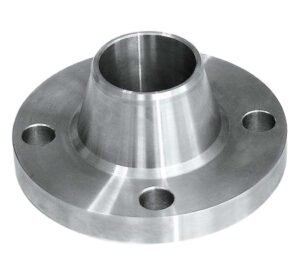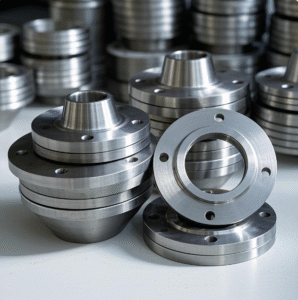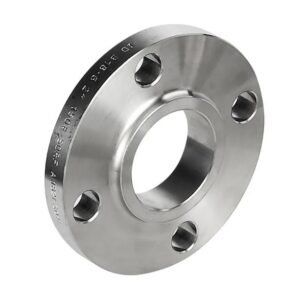
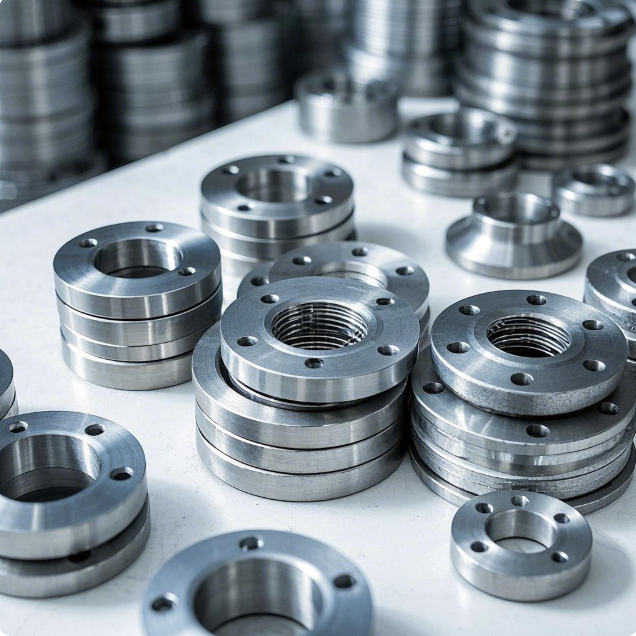
The Middle East, home to over 50% of the world’s proven oil reserves, is witnessing a seismic shift in infrastructure investments. As the region accelerates offshore drilling, sour gas projects, and pipeline expansions, duplex stainless steel flanges are emerging as a cornerstone of this growth. With unmatched corrosion resistance, durability, and cost-efficiency over their lifecycle, duplex flanges (grades 2205 and 2507) are poised to dominate the Middle East oilfield market, projected to grow at a CAGR of 9.8% from 2024 to 2026. This guide dives into the drivers, challenges, and opportunities shaping this surge.
Why Duplex Flanges Are the Middle East’s New Frontier
Duplex stainless steel flanges offer a critical edge in the Middle East’s harsh operating environments:
-
Chloride Resistance: Withstand seawater, brine, and H₂S in offshore/sour gas fields.
-
2x Strength of 316L: Thinner, lighter designs cut material costs by 20–30%.
-
25+ Year Lifespan: Reduce replacements in high-temperature, high-pressure (HTHP) wells.
2024 Market Snapshot:
-
Regional Demand: 38,000 tons of duplex flanges consumed in 2023, led by Saudi Arabia (45%), UAE (30%), and Qatar (15%).
-
Price Range: $180–$250 per flange (DN100, ASTM A182), with super duplex 2507 at $350–$500.
3 Key Drivers Fueling Demand (2024–2026)
1. Mega Offshore Projects
Saudi Aramco’s Safaniya Field Expansion and ADNOC’s Lower Zakum Offshore Development require 15,000+ duplex flanges for subsea pipelines and manifolds. These projects prioritize materials that resist pitting and crevice corrosion in 40,000+ ppm chloride environments.
2. Sour Gas Field Investments
Qatar’s North Field Expansion and Kuwait’s Jurassic Gas Fields involve H₂S concentrations up to 5%. Duplex 2507, compliant with NACE MR0175, is replacing carbon steel to prevent sulfide stress cracking.
3. Aging Infrastructure Replacement
Over 60% of the GCC’s oil pipelines are 20+ years old. Governments are mandating upgrades to duplex flanges under initiatives like Saudi Arabia’s Vision 2030 and UAE’s Energy Strategy 2050.
Country-by-Country Breakdown
| Country | 2024–2026 Demand (tons) | Key Projects | Preferred Duplex Grade |
|---|---|---|---|
| Saudi Arabia | 22,000 | Safaniya, Jafurah Gas Field | 2205 (60%), 2507 (40%) |
| UAE | 14,500 | Lower Zakum, Hail & Ghasha Sour Gas | 2507 (70%) |
| Qatar | 8,000 | North Field LNG Expansion | 2507 (90%) |
| Kuwait | 3,500 | Jurassic Gas, Al-Zour Refinery | 2205 (80%) |
Supply Chain Dynamics: Local vs. Global
While the Middle East imports 65% of duplex flanges from Europe (Outokumpu, Sandvik) and India (Jindal, Tata Steel), local production is rising:
-
Saudi Arabia: Rajhi Steel and SABIC are investing $200M in duplex forging facilities.
-
UAE: Emirates Steel plans a 2025 duplex flange plant in Abu Dhabi’s KIZAD.
Tariff Advantages: GCC nations impose 0–5% tariffs on duplex raw materials, incentivizing local manufacturing.
Challenges to Overcome
-
Skilled Labor Shortages: 70% of Middle East EPCs report welding/installation delays due to uncertified duplex specialists.
-
Counterfeit Materials: 15% of “duplex” flanges fail PMI tests due to low Mo/N content.
-
Logistical Bottlenecks: Red Sea shipping disruptions inflate lead times by 3–4 weeks.
Strategic Opportunities for Suppliers
-
Local Partnerships: Joint ventures with GCC distributors like Al Mansoori (UAE) or Al Jaber Group (Qatar).
-
Certification Focus: Stock NACE MR0175 and ADNOC/ARAMCO-approved flanges.
-
Digital Traceability: Blockchain QR codes (e.g., VeChain) to combat counterfeits.
2026 Forecast: Market Outlook
-
Demand: 52,000 tons (9.8% CAGR), driven by 120+ new oil/gas projects.
-
Price Trends: Super duplex 2507 costs to drop 8% as UAE/Qatar scale production.
-
Tech Shifts: AI-driven predictive maintenance will extend flange lifespan by 30%.
FAQ: Duplex Flanges in Middle East Oil Fields
Q: Why is 2507 preferred over 2205 in UAE projects?
A: UAE’s HTHP sour gas reservoirs (e.g., Hail & Ghasha) require 2507’s higher PRE (≥40) for chloride resistance.
Q: How do Saudi local content policies impact suppliers?
A: ARAMCO mandates 70% local content for new projects—boost partnerships with Rajhi Steel.
Q: What’s the lead time for duplex flanges in the GCC?
A: 12–16 weeks for imports; 8 weeks for local stock.