Unlocking Duplex Steel Savings: Design Optimization Strategies for Weight Reduction & Material Efficiency
For engineers facing sky-high alloy costs and punishing corrosion environments, duplex stainless steels (2205, 2507) offer a rare win-win: exceptional strength and corrosion resistance. But most designs waste 20-40% of duplex’s potential through conservative engineering. By optimizing geometries, leveraging advanced fabrication, and targeting efficiency levers, you can transform duplex from a premium material into your most economical solution.
1. The Physics of Efficiency: Why Duplex Enables Radical Lightweighting
Duplex alloys combine ferritic strength with austenitic toughness, creating unique advantages:
| Property | 316L | Duplex 2205 | Impact on Design |
|---|---|---|---|
| Yield Strength | 215 MPa | 550 MPa | 60% thinner walls for same pressure rating |
| Elastic Modulus | 200 GPa | 210 GPa | Higher stiffness allows longer spans |
| Fatigue Endurance Limit | 240 MPa | 400 MPa | Reduced mass in cyclic loading applications |
| Thermal Expansion | 16.5 µm/m°C | 13.0 µm/m°C | Lower thermal stress → simpler supports |
Real-World Math:
For ASME B31.3 process piping at 1000 psi:
-
316L Schedule 80: Wall thickness = 12.7 mm
-
2205 Optimized: Wall thickness = 5.6 mm (using allowable stress 38 ksi vs. 16.5 ksi)
→ 56% weight reduction per meter
2. Design Optimization Tactics: Beyond Thickness Reduction
A. Structural Efficiency: Doing More with Less
-
Hollow Sections: Replace solid supports with laser-welded duplex tubes:
-
40% weight savings
-
30% faster fabrication (vs. machining solids)
-
B. Fluid Systems: Hydraulic & Piping
-
Thin-Wall Tubing: For hydraulic lines, leverage duplex’s high collapse resistance:
-
Standard: 316L, OD 10mm × wall 1.5mm
-
Optimized: 2205, OD 10mm × wall 0.8mm (Burst pressure >10,000 psi)
→ 47% material savings
-
-
Integrated Manifolds: Replace flanged assemblies with electron-beam welded duplex blocks:
-
Eliminates 85% of gaskets/bolts (crevice corrosion risks)
-
Cuts assembly weight by 30-60%
-
3. Fabrication-Driven Savings: Cutting Costs Beyond Material
| Technique | Traditional Approach | Duplex Optimization | Savings |
|---|---|---|---|
| Welding | GTAW with 100% penetration | Hybrid laser-GTAW | 50% faster, HAZ reduced 80% |
| Forming | Hot forming + re-solution anneal | Cold forming ≤5% strain | Eliminates $8k/ton heat treatment |
| Cutting | Plasma + grinding | Waterjet cutting with garnet abrasive | Zero HAZ, ±0.1mm tolerance |
| Surface Finish | Manual polishing | Electropolishing (20-30µm removal) | 70% labor reduction |
Critical Note: Cold forming duplex requires certified annealed material with elongation >25% (ASTM A240).
4. Material Efficiency: Slashing Waste Through Smart Design
A. Nesting Optimization for Plate Cutting
-
Problem: Standard nesting wastes 30-40% of duplex plate.
-
Solution: AI-driven nesting software (e.g., SigmaNEST):
-
Uses genetic algorithms to maximize part density
-
Result: 92% material utilization vs. industry avg. 65%
-
B. Standardizing Sizes
Reduce custom cuts by designing around mill-preferred dimensions:
| Product | Mill-Preferred Sizes | Waste Reduction |
|---|---|---|
| Plate | 1500×3000mm, 2000×6000mm | 18% |
| Pipe | 6m random lengths | 12% |
| Bar | 3m, 6m straight lengths | 9% |
5. Real-World Case: $1.2M Savings on FPSO Seawater System
Project: 5km duplex 2205 seawater piping for offshore platform
| Design Parameter | Initial Design | Optimized Design | Savings |
|---|---|---|---|
| Pipe wall thickness | 8.0 mm | 5.6 mm | 92 tons material |
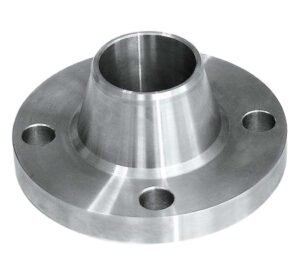
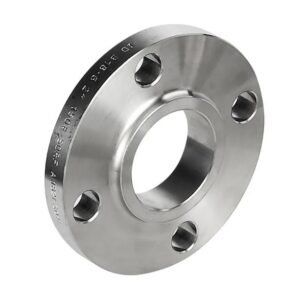
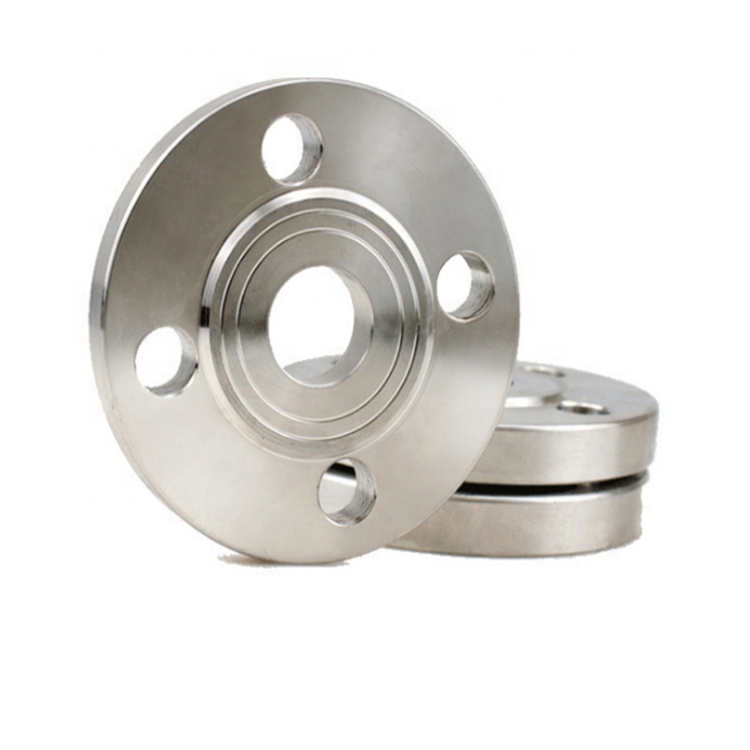
| Flange count | 420 | 112 (integrated manifolds) | $280K fabrication |
| Support structures | Carbon steel | Duplex min. mass topology | 37 tons steel |
| Total Project Cost | $4.8M | $3.6M | $1.2M (25%) |
6. Overcoming Optimization Barriers
A. Fear of Thin Walls
-
Myth: “Thinner walls increase vulnerability.”
-
Reality: Duplex’s higher yield strength provides equal pressure containment with better fatigue resistance.
-
Validation: ASME Section VIII Div. 2 Part 5 FEA analysis for cyclic service.
B. Fabrication Resistance
-
Objection: “We can’t weld thin duplex!”
-
Solution:
-
Joint design: 70° V-groove (not 37.5°) reduces filler metal 40%
-
Automated pulsed GTAW with arc oscillation
-
Mandatory interpass temp monitoring (IoT sensors)
-
C. Cost Modeling Shortfalls
-
Problem: ERP systems only track material $/kg, ignoring downstream savings.
-
Fix: TCO calculator capturing:
textSavings = (Freight cost × weight reduction) + (Welding hours × labor rate) + (Anti-fouling savings)
7. Implementation Roadmap
-
Re-Benchmark Allowable Stresses
-
Use ASME BPVC Section II-D Table 1A for 2205/2507 (not default 316L values)
-
-
Adopt Digital Workflows
-
Integrate materials data (Granta MI) with CAD (SolidWorks) and FEA (ANSYS)
-
-
Redefine Vendor Specifications
-
Replace “Schedule 80 pipe” with:
*”Min. wall = (P × D) ÷ (2S × E + 0.8P) where S=38 ksi for 2205″*
-
-
Quantify Efficiency Gains
-
Track:
-
Kg/kN (structural efficiency)
-
Material utilization %
-
Welding meters/kg
-
-
Conclusion: Engineering Intelligence Over Material Cost
Duplex stainless steel’s value isn’t in surviving corrosive hell—it’s in enabling lighter, smarter, cheaper-to-build assets. By deploying:
✅ Physics-based thinning (leveraging 550 MPa yield strength)
✅ Additive-friendly designs (integrated manifolds, hollow sections)
✅ Fabrication efficiency (laser welding, cold forming)
…you transform duplex from a cost premium into your most powerful profit engine.
“Optimizing our chlorine dioxide reactor with duplex 2205 thinned walls cut material cost by $320K. But the real win? Shipping weight dropped 18 tons—saving $140K in freight and eliminating crane upgrades.”
– Project Engineer, Pulp & Paper Plant
Stop over-engineering. Start optimizing. The alloy’s capabilities exist; your savings await in the blueprint.