Selecting the right stainless steel flanges for hydraulic systems operating under high pressure (150LB to 900LB) is critical to preventing leaks, catastrophic failures, and costly downtime. This guide combines ASME B16.5 standards, material science, and real-world test data to help engineers and procurement teams make informed decisions.
1. Understanding Flange Pressure Classes
Flange pressure classes (150LB, 300LB, 600LB, 900LB) indicate the maximum pressure a flange can withstand at a specific temperature. These classes align with ASME B16.5 and API 6A standards.
-
150LB: Low-pressure systems (e.g., water hydraulics, HVAC).
-
300LB–600LB: Industrial hydraulics, oil and gas pipelines.
-
900LB: Extreme-pressure applications (e.g., offshore blowout preventers, heavy machinery).
Key Rule: Pressure ratings decrease as temperature increases. Always cross-reference pressure-temperature (P-T) charts for your material and class.
2. Stainless Steel Grades: Matching Material to Pressure & Environment
| Grade | Tensile Strength | Max Temp | Best For |
|---|---|---|---|
| 304/304L | 515 MPa | 800°F (427°C) | Non-corrosive, low-pressure hydraulics |
| 316/316L | 485 MPa | 800°F (427°C) | Chloride-rich or marine environments |
| Duplex 2205 | 620 MPa | 600°F (316°C) | High-pressure, high-chloride systems |
Why Duplex?
Duplex 2205 offers 2x the yield strength of 316L, allowing thinner, lighter flanges without compromising pressure ratings.
3. Pressure-Temperature Rating Charts
ASTM A182 F316L Flanges (ASME B16.5)
| Temp (°F) | 150LB (psi) | 300LB (psi) | 600LB (psi) | 900LB (psi) |
|---|---|---|---|---|
| 100 | 285 | 740 | 1,480 | 2,220 |
| 200 | 260 | 675 | 1,350 | 2,025 |
| 300 | 230 | 600 | 1,200 | 1,800 |
| 400 | 200 | 520 | 1,040 | 1,560 |
Example: A 300LB flange at 400°F is derated to 520 psi—not its full 740 psi rating.
4. Step-by-Step Selection Guide
-
Define Operating Conditions:
-
Max Pressure: Include safety margins (e.g., 1.5x operating pressure for pulsating systems).
-
Temperature: Account for ambient heat and fluid temperature.
-
Fluid Type: Corrosive (e.g., seawater, acids) vs. non-corrosive (e.g., oil, water).
-
-
Choose Material:
-
316L: Default for most hydraulic systems with moderate chlorides.
-
Duplex 2205: For sour gas (H₂S), seawater, or pressures >600LB.
-
-
Select Flange Type:
-
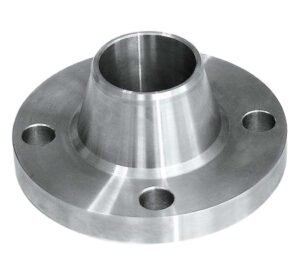
Weld Neck: Best for 600LB+ systems (reduces stress concentrations).
-
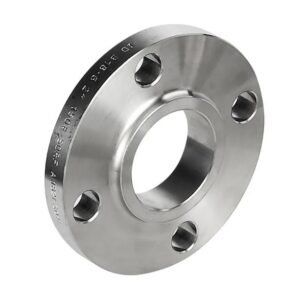
Slip-On: Cost-effective for 150LB–300LB with stable loads.
-
Threaded: Avoid for cyclic pressures >300LB (risk of thread fatigue).
-
-
Verify Compliance:
-
ASME B16.5: Dimensional and pressure standards.
-
ASTM A182: Material certification for forged flanges.
-
5. Common Mistakes & Fixes
| Mistake | Risk | Solution |
|---|---|---|
| Ignoring temperature derating | Flange failure at high temps | Always use P-T charts. |
| Mixing flange/bolt materials | Galvanic corrosion | Use 316L bolts with 316L flanges. |
| Over-torquing bolts | Gasket blowout | Follow ASME PCC-1 torque specs. |
6. Installation Best Practices
-
Alignment: Misalignment >0.5mm can cause leaks. Use laser alignment tools.
-
Bolt Torque:
-
300LB Flange (316L): 85–100 ft-lbs (M16 bolts).
-
600LB Flange (Duplex): 120–140 ft-lbs (M24 bolts).
-
-
Gasket Selection:
-
Spiral Wound (316L + Graphite): For 600LB–900LB systems.
-
PTFE: Low-pressure, chemical-resistant.
-
7. Case Study: Offshore Hydraulic System Failure
A North Sea platform using 304 flanges in a 300LB seawater cooling system experienced crevice corrosion at 140°F. Replacement with 316L 600LB flanges and spiral-wound gaskets eliminated failures for 5+ years.
8. When to Upgrade to 900LB Flanges
-
Critical Systems: Blowout preventers, subsea manifolds.
-
Safety Margins: Operating near 600LB limits.
-
Thermal Cycling: Frequent temp/pressure swings.
Pressure-Temperature Chart for Duplex 2205
| Temp (°F) | 300LB (psi) | 600LB (psi) | 900LB (psi) |
|---|---|---|---|
| 100 | 1,100 | 2,200 | 3,300 |
| 300 | 950 | 1,900 | 2,850 |
| 500 | 700 | 1,400 | 2,100 |
Conclusion
Selecting stainless steel flanges for high-pressure hydraulic systems requires balancing material properties, pressure-temperature ratings, and operational demands. Key takeaways:
-
316L is the baseline for chloride environments; Duplex 2205 excels in extreme pressure/corrosion.
-
Always derate flange pressure as temperature rises.
-
Validate certifications (ASTM A182) and prioritize proper installation.
Pro Tip: Use PMI testing (Positive Material Identification) to combat counterfeit materials.