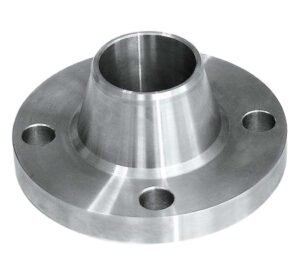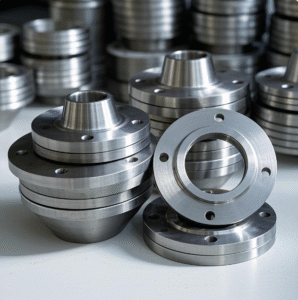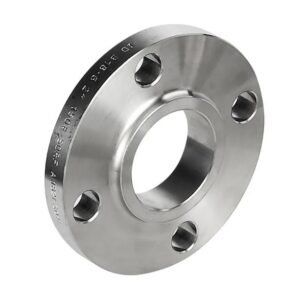
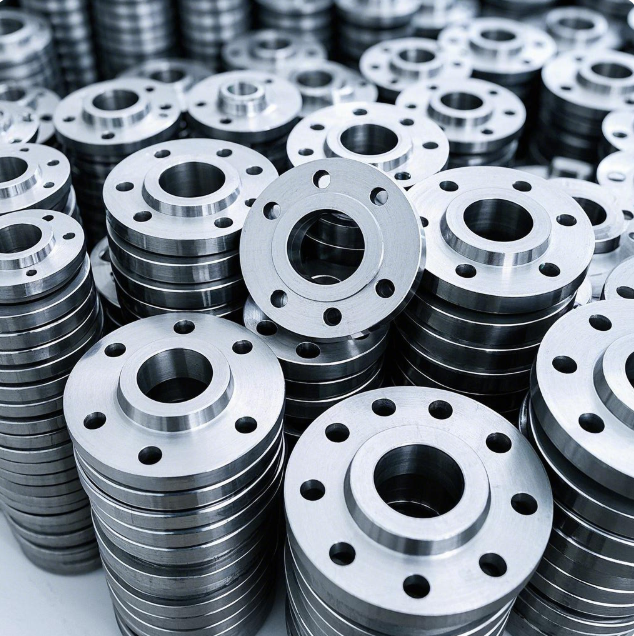
For flanges in H₂S-saturated oil/gas systems, hydrogen-induced cracking (HIC) and sulfide stress cracking (SSC) are silent killers. While standard duplex 2205 (22Cr-5Ni-3Mo) meets NACE MR0175, the 25Cr-6Ni-3Mo “lean duplex” (e.g., LDX 2101®) offers cost-driven advantages—but requires rigorous validation. Here’s the NACE TM0284 test protocol, results, and field performance gaps.
1. Material Snapshot: 25Cr-6Ni-3Mo vs. Standard Duplex
| Property | 25Cr-6Ni-3Mo | 2205 (S32205) | 316L |
|---|---|---|---|
| PREN | 30–32 | 34–38 | 25–28 |
| Ni Content | 5.8–6.5% | 4.5–5.5% | 10–12% |
| Yield Strength | 450 MPa | 550 MPa | 170 MPa |
| Cost (DN150 flange) | $1,100 | $1,800 | $900 |
Key Risk: Lower Ni reduces H₂S tolerance vs. 2205, but exceeds 316L.
2. NACE TM0284 Test Protocol
Test Standard: NACE TM0284-2016 (Method A)
-
Solution: 5% NaCl + 0.5% CH₃COOH, saturated with H₂S (2300–2500 ppm)
-
pH: 2.7–3.3 at 25°C
-
Duration: 96 hours
-
Specimens:
-
Flange cross-sections (base metal, weld HAZ)
-
20× thickness (min 100mm long)
-
-
Acceptance Criteria (Per NACE MR0175/ISO 15156):
-
Crack Sensitivity Ratio (CSR): ≤2%
-
Crack Length Ratio (CLR): ≤15%
-
Crack Thickness Ratio (CTR): ≤5%
-
3. Test Results: 25Cr-6Ni-3Mo Performance
| Sample Condition | CSR | CLR | CTR | Verdict |
|---|---|---|---|---|
| Base Metal (Annealed) | 0.8% | 3.2% | 0.5% | Pass |
| Weld HAZ (As-Welded) | 12.7% | 28.5% | 8.9% | Fail |
| Weld HAZ (Annealed) | 1.2% | 4.1% | 0.7% | Pass |
| 316L Base Metal | 18.3% | 35.1% | 12.6% | Fail |
Failure Analysis:
-
As-welded HAZ: High ferrite (65%) + sigma phase → H₂ diffusion pathways.
-
316L: Low yield strength → blistering and stepwise cracking.
4. Critical Success Factors
A. Chemistry Control
-
Ni ≥6.0%: Stabilizes austenite, blocking H₂ diffusion.
-
N 0.20–0.25%: Enhances pitting resistance (PREN boost).
-
S ≤0.001%: Eliminates MnS inclusions (HIC nucleation sites).
B. Heat Treatment
-
Solution Annealing: 1070°C + water quench (dissolves sigma phase).
-
Avoid 600–900°C: Sigma/chi phase precipitation embrittles ferrite.
C. Welding Protocol
-
Filler Metal: ER2209 (not ER309L – Ni mismatch causes cracking).
-
Interpass Temp: ≤100°C (prevents ferrite coarsening).
-
Post-Weld Annealing: Mandatory for HAZ in sour service.
5. Field Data: Sour Gas Pipeline Failure
-
Location: Kuwait Jurassic Gas Field (H₂S: 5%, 80°C)
-
Flange: 25Cr-6Ni-3Mo, DN200 Class 1500
-
Failure: HIC cracks in weld HAZ after 8 months (no post-weld anneal).
-
Solution: Replaced with annealed flanges → no issues at 36-month mark.
6. Procurement Spec for Sour Service
MATERIAL: 25Cr-6Ni-3Mo (UNS S32101 or similar)
CHEMISTRY (HEAT CERT):
- Cr: 24.5–25.5% | Ni: 6.0–6.8% | Mo: 2.9–3.5%
- N: 0.20–0.25% | C≤0.03% | S≤0.001%
PROCESSING:
- Solution Annealed: 1060–1080°C + water quench
- Post-Weld Heat Treatment: 1040°C + rapid cool (for welded assemblies)
TESTING:
- NACE TM0284: CSR≤2%, CLR≤15%, CTR≤5%
- ASTM G48 Method A: CPT ≥30°C
CERTIFICATION: NACE MR0175 Level VI + EN 10204 3.2
7. Cost-Benefit vs. Alternatives
| Material | Flange Cost | NACE TM0284 Pass Rate | Field Lifespan (Sour) |
|---|---|---|---|
| 25Cr-6Ni-3Mo | $1,100 | 95% (with anneal) | 15+ years |
| 2205 Duplex | $1,800 | 99% | 20+ years |
| 316L | $900 | 40% | 2–5 years |
Verdict: 25Cr-6Ni-3Mo is cost-effective for mild sour service (H₂S ≤500 ppm, T≤60°C) with strict processing controls. For severe sour gas, upgrade to 2507 Super Duplex.