1. Material Certification and Traceability
This is your first and most important line of defense.
-
“Can you provide a full EN 10204 3.1 Material Test Report (MTR)?”
-
Why ask: A 3.1 certificate is a legally binding document that provides verified test results from an independent inspector within the manufacturer’s organization. Do not accept a less rigorous 2.2 certificate or a simple “Certificate of Conformance.”
-
-
“Is the material heat number clearly identified on the MTR and physically marked on each piece or bundle?”
-
Why ask: This ensures full traceability from the mill melt to your final component. You must be able to match the product to its certification.
-
-
“Who is the original mill or manufacturer? Can you provide the mill’s original test reports?”
-
Why ask: Reputable suppliers will be transparent about their source. Major mills like Haynes International (the original developer), Special Metals, ATI, and other approved mills have stringent quality controls. This helps avoid material from unknown or substandard sources.
-
2. Manufacturing Process and Specifications
Hastelloy X is often used in extreme environments; how it’s made matters.
-
“Is the pipe seamless (SMLS) or welded?”
-
Why ask: For high-temperature and high-pressure applications, seamless pipe is almost always specified (e.g., ASTM B435) as it has a homogeneous structure without a weld seam, which can be a potential weak point. Welded pipe (ASTM B729) may be used for certain lower-stress applications but requires scrutiny.
-
-
“What ASTM or ASME specification does the material conform to?”
-
Why ask: Ensure it meets the correct standard. For pipe, it’s typically ASTM B435 (seamless) or B729 (welded). For flanges, it’s often ASTM B564 (forgings). Confirm the specific grade UNS N06002 is listed.
-
-
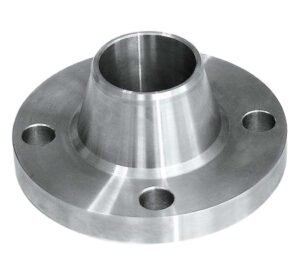
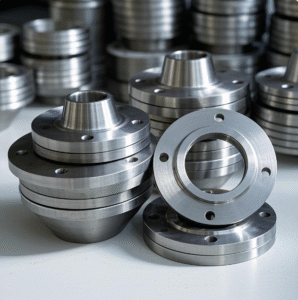
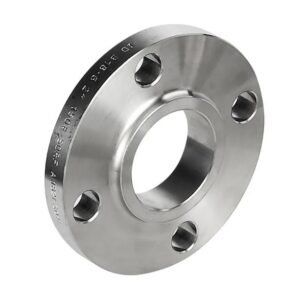
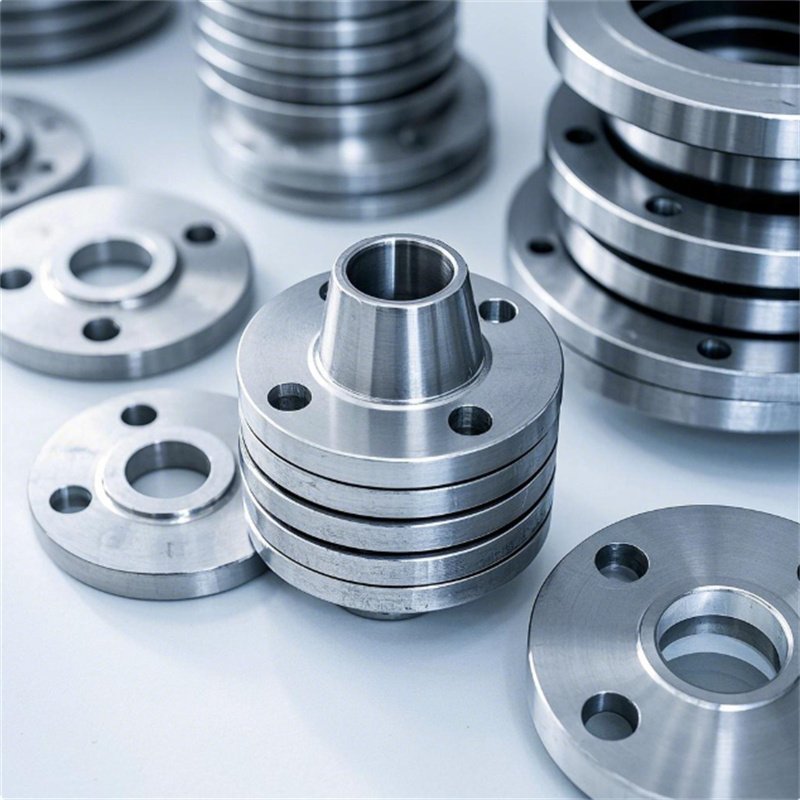
“For flanges, are they forged, cast, or machined from bar stock?”
-
Why ask: Forged flanges (ASTM B564) are superior for critical service. They have better mechanical properties and a more refined grain structure compared to cast or bar stock alternatives.
-
3. Chemical and Mechanical Properties Verification
The paper MTR must be verified against the physical product.
-
“Can you provide the actual chemical composition and mechanical property results from the mill’s test reports?”
-
Why ask: Check that key elements are within the specified range, especially Carbon (C), Chromium (Cr), Molybdenum (Mo), and Iron (Fe). Hastelloy X should not have Fe as the dominant element.
-
-
“Do you perform Positive Material Identification (PMI) testing on incoming material? Can we witness this or see the results?”
-
Why ask: PMI using an XRF analyzer is a quick, non-destructive way to verify the alloy grade and catch gross mix-ups (e.g., getting 304 stainless instead of Hastelloy X). This is a basic expectation.
-
-
“Are mechanical tests (Tensile, Yield, Elongation, Hardness) performed at room temperature and, if required, at elevated temperature?”
-
Why ask: Hastelloy X is chosen for its high-temperature strength. Verify that the tests meet the minimum requirements of the ASTM standard.
-
4. Quality Assurance and Testing
Probe their internal quality processes.
-
“What non-destructive testing (NDT) is performed?”
-
For Pipe: Ask about hydrostatic testing or eddy current/ultrasonic testing to check for integrity, especially if welded.
-
For Flanges: Ask about Liquid Penetrant Testing (PT) or Magnetic Particle Testing (MT) to detect surface defects. (Ensure PT fluids are chlorine and sulfur-free to prevent contamination).
-
-
“What is your procedure for ensuring the material is free of iron and other contaminants?”
-
Why ask: Cross-contamination from carbon steel tools (grinders, brushes, saws) is a major risk. It can embed iron particles on the surface, leading to rust spots and potential corrosion initiation. They should have dedicated, segregated tools and areas for nickel alloys.
-
-
“What is your internal process for verifying material before it ships?”
-
Why ask: A good supplier will have a checklist that includes verification of heat numbers, visual inspection for damage/contamination, and PMI.
-
5. Logistics and Packaging
How they handle the material is indicative of their overall care.
-
“How do you package and protect Hastelloy X to prevent corrosion and contamination during storage and transit?”
-
Why ask: The answer should include: VCI paper (Volatile Corrosion Inhibitor), chloride-free plastic wrap, and plastic strapping (never steel straps that can cause galvanic corrosion). Wooden crates are preferred for flanges. Material should be kept dry and segregated from carbon steel.
-
-
“What is the current lead time, and can you provide mill test reports for review before shipment?”
-
Why ask: Managing project schedules is crucial. Reviewing MTRs before payment and shipment allows you to catch any issues early.
-
6. Commercial and Supply Chain Transparency
-
“Is the material in stock at your warehouse, or will it be shipped directly from the mill?”
-
Why ask: This helps you understand the supply chain and potential lead times.
-
-
“What is your process for handling material that fails to meet specification?”
-
Why ask: A reputable supplier will have a clear, no-hassle return and replacement policy for non-conforming material.
-
Summary: Your Pre-Purchase Checklist
| Category | Key Question to Ask | What to Look For in the Answer |
|---|---|---|
| Certification | “EN 10204 3.1 MTR?” | “Yes,” and a sample report. Heat number traceability. |
| Origin | “Who is the original mill?” | A recognized name (Haynes, Special Metals, ATI, etc.). |
| Manufacturing | “Seamless or welded pipe?” | “Seamless” (ASTM B435) for critical service. |
| Verification | “Do you perform PMI testing?” | “Yes, on all material,” with offered proof. |
| Quality | “How do you prevent contamination?” | Dedicated tools, segregated storage, proper packaging. |
| Testing | “What NDT is used?” | Hydro/UT/ET for pipes, PT/MT for flanges (with chlorine-free fluids). |
| Packaging | “How is it packaged?” | VCI paper, plastic wrap, plastic straps, protected ends. |
Final Recommendation: The best suppliers will welcome these questions and have answers readily available. They understand the critical nature of the alloys they sell. If a supplier is evasive, unable to provide documentation, or offers a significant discount without justification, consider it a major red flag for potential quality issues.
By asking these questions, you demonstrate expertise and ensure you are partnering with a supplier who can guarantee the material integrity your projects demand.