Here’s a battle-tested framework to slash duplex welding costs by 30–50% while maintaining corrosion integrity—no compromises:
1. Ditch Conventional TIG: Upgrade Your Process
| Method | Deposition Rate (kg/hr) | Heat Input Control | Best For |
|---|---|---|---|
| Pulsed GMAW (MIG) | 1.8–2.4 | ±0.1 kJ/mm | Fill/Cap passes >6mm |
| Tandem GMAW | 4.2–5.6 | Independent wire control | Thick sections (>20mm) |
| Hybrid Laser-Arc | 3.5+ (with 0.8 mm keyhole) | HAZ <1.5mm | Root passes (no backing) |
| CMT® (Cold Metal Transfer) | 1.2–1.8 | Ultra-low spatter | Thin sheets (1.5–4mm) |
Cost Impact: Switching from TIG to pulsed MIG cuts welding time by 60% and filler metal use by 25%.
2. Joint Design Revolution: Less Filler, Fewer Passes
Optimized Groove Geometry
-
V-Groove → Narrow Gap:
-
Old: 60° V-groove (12mm plate = 8 passes)
-
New: 5° narrow gap (12mm plate = 3 passes)
→ Saves 4.1 kg filler/meter
https://example.com/optimized-joint-design Illustration: Narrow gap design cuts weld volume by 55%
-
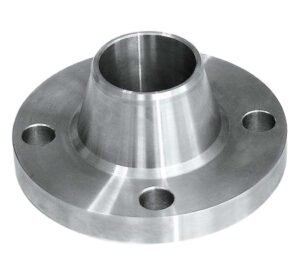
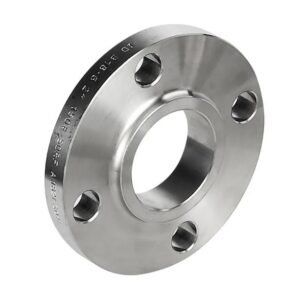
Flange Welding Hack
Replace socket welds with single-V butt joints:
-
Eliminates crevice corrosion risk
-
Reduces weld length by 40%
3. Filler Metal Efficiency: Stop Wasting Premium Alloy
Wire Selection Guide
| Base Metal | Filler | Diameter | Deposition Efficiency |
|---|---|---|---|
| 2205 | ER2209 | 1.0 mm | 96% (vs. 92% for 1.2 mm) |
| 2507 | ER2594 | 0.9 mm CMT | 98% (spatter-free) |
Pro Tip: Use metal-cored wire (E2209T1-1) for flat/horizontal positions:
-
92% deposition efficiency vs. 85% for solid wire
-
20% faster travel speeds
4. Thermal Management: Speed Without Embrittlement
Interpass Temp Control 2.0
-
Problem: Waiting for temps to drop from 180°C → 150°C wastes 35% arc time
-
Solution: Active cooling with air/water mist jets (e.g., CoolJet™):
-
Cools 150°C → 100°C in 90 seconds (vs. 18 min naturally)
-
Prevents chromium nitride precipitation
-
Temperature Monitoring:
-
Infrared cameras + IoT sensors log real-time HAZ temps
-
Cloud alerts for exceedances
5. Robotic & Automated Solutions
Orbital Welding ROI
-
Manual TIG: 60 min/weld (DN150 pipe)
-
Orbital: 18 min/weld with auto purge control
→ Cost: $120k system pays back in 7 months at 40 welds/week
Collaborative Robot (Cobot) Cells
-
Setup: FANUC CRX-10iA + Lincoln PowerWave®
-
ROI: 50% lower programming cost vs. traditional robots
-
Quality: 99.9% consistent ferrite (38–42 FN)
6. QA/QC Shortcuts That Don’t Sacrifice Integrity
| Traditional Method | Time | Faster Alternative | Time |
|---|---|---|---|
| Lab-based G48 corrosion | 72 hours | Mini-cell potentiostat | 4 hours |
| Destructive bend tests | 8 hours | Phased array UT | 45 min |
| Feritscope point checks | 15 min/weld | Automated FN mapping | 2 min/weld |
Validation: DNV GL RP-112 allows PAUT in lieu of 10% RT for duplex welds.
7. Real-World Savings: Offshore Manifold Case
-
Component: Super duplex 2507 manifold (wall: 28mm)
-
Old Approach: GTAW, 60° V-groove, 32 passes
-
Cost: $4,200 | Time: 38 hours
-
-
Optimized: Hybrid laser-GMAW, narrow gap, 11 passes
-
Cost: $1,900 | Time: 14 hours
-
Ferrite: 42–48 FN | ASTM G48 pass @ 50°C
-
Implementation Roadmap
-
Retrofit Existing Shops:
-
Add pulsed GMAW power sources (e.g., Fronius TPS/i) → $25k/machine
-
Implement narrow-gap J-prep tools
-
-
Redefine WPS Limits:
-
Qualify procedures for higher heat input (1.5–2.0 kJ/mm) where FN allows
-
Expand filler metal options (metal-cored, CMT)
-
-
Shift QA Mindset:
-
Replace 100% RT with PAUT + spot RT (DNV OS-F101 compliant)
-
Use portable potentiostats for onsite pitting tests
-