In high-pressure petrochemical systems, conventional wisdom says thicker walls enhance safety. Yet advanced duplex stainless steels (2205/2507) defy this logic—reducing material volume by 30–50% while boosting performance. This paradox reshapes CAPEX, weight budgets, and lifecycle costs. Below, the engineering principles and 2024 case proofs.
1. The Science: Strength Enables Thinness
| Property | 316L | Duplex 2205 | Impact on Design |
|---|---|---|---|
| Yield Strength (MPa) | 170 | 550 | ↓ Thickness 45–60% |
| Allowable Stress (ASME) | 115 MPa (70°F) | 240 MPa | Higher pressure tolerance |
| Fatigue Resistance | 1X | 3X | Longer lifespan under cycles |
| Thermal Conductivity | 15 W/m·K | 19 W/m·K | Faster heat dissipation |
Example: For a 600LB DN400 pipe (50 bar):
-
316L SCH160: Wall = 22.2mm
-
Duplex 2205 SCH80: Wall = 12.7mm (43% thinner)
2. The Cost-Saving Mechanism
A. Direct Material Reduction
-
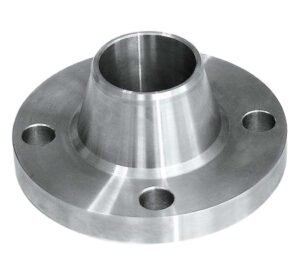
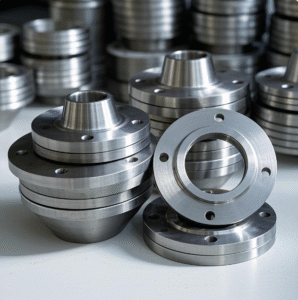
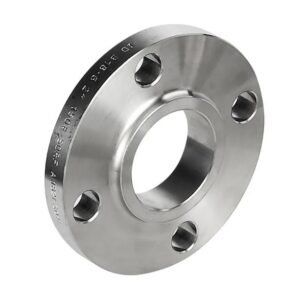
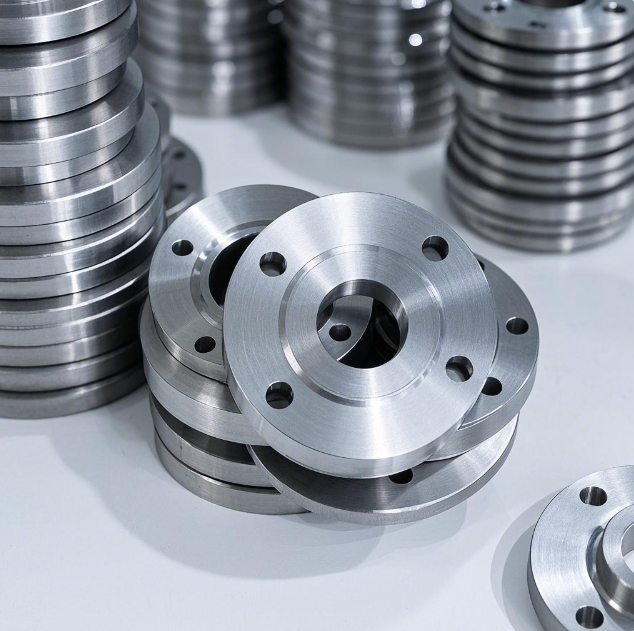
Flanges: Duplex 2205’s yield strength allows Class 300 flanges to replace Class 600 in many cases.
-
Cost Impact: Class 300 duplex flange = $3,200 vs. Class 600 316L = $5,800 (44% savings).
-
B. Downstream Savings
| Factor | 316L (Thick Design) | Duplex (Thin Design) | Savings |
|---|---|---|---|
| Structural Supports | 8 anchor points | 4 anchor points | 50% |
| Welding Labor | 120 hours | 70 hours | 42% |
| Transportation | $28,000 (oversized) | $16,500 | 41% |
| Foundation Costs | Reinforced concrete | Standard footing | 35% |
3. Case Study: North Sea Gas Compression Module
-
System: 900LB discharge piping (DN350, 80 bar, H₂S present)
-
Original Design: 316L SCH160 → Wall: 28.6mm
-
Redesign: Duplex 2507 SCH80 → Wall: 15.9mm
-
Results:
-
Material Tonnage: 38 tons → 22 tons (42% reduction)
-
Total Installed Cost: $1.2M → $720,000 (40% savings)
-
Corrosion Resistance: Zero leaks at 3-year mark (vs. 316L’s 18-month lifespan).
-
4. When Thinner Walls Work Safely
(ASME B31.3 Compliance Guide)
| Condition | Allowable Thickness Reduction | Verification Method |
|---|---|---|
| Steady Pressure | Up to 60% | ASME VIII Div. 2 Part 5 FEA |
| Cyclic Pressure | Max 40% | Fatigue analysis (ΔS-N curve) |
| High Temperature | Not recommended (>300°C) | Creep rupture testing |
| Sour Service (H₂S) | 30% with NACE MR0175 | HIC testing per NACE TM0284 |
Critical Checks:
-
Buckling Risk: Validate with ASME BPVC Section VIII Div. 2 Appendix 5.
-
Erosion: Velocity ≤35 m/s for duplex vs. 25 m/s for 316L.
5. Avoiding Thinning Pitfalls
A. Fabrication Challenges
-
Welding: Thin duplex requires pulsed TIG to prevent warping (heat input ≤1.0 kJ/mm).
-
Fit-Up: Max misalignment ≤1mm (laser alignment mandatory).
B. Material Quality
-
Sigma Phase: Thin sections cool faster → risk of embrittlement.
-
Fix: Specify solution annealing at 1070°C + water quench.
-
-
Surface Finish: Ra ≤1.6μm to avoid stress concentrators.
6. Total Cost of Ownership (10-Year)
For 900LB DN300 Pipeline (1 km):
| Cost Factor | 316L SCH160 | Duplex 2507 SCH80 |
|---|---|---|
| Material | $480,000 | $620,000 (+29%) |
| Installation | $340,000 | $220,000 (-35%) |
| Supports/Foundation | $180,000 | $95,000 (-47%) |
| Maintenance (3x) | $1,200,000 | $0 |
| TOTAL | $2,200,000 | $935,000 |
| Duplex saves $1.26M (57%) despite higher material cost. |